Blackbury Camp sits on the high ground between Southleigh and Colyton, on a long spur running out from Broad Down. Even under the present woodland the shape of the place is obvious: a single great ring of bank and ditch enclosing an oval interior nearly two hundred metres across. The rampart is built of flint rubble, wide enough to walk along in places, and still stands several metres above the outer ditch. It is the scale that tells you what it was – a major Iron Age enclosure, built by a community capable of shifting thousands of tons of material and making a statement while they did it.
Large univallate hillforts like this are not common. They belong to the middle and later Iron Age and tend to occupy commanding positions on ridges or spurs. The earthworks are usually massive: banks six to twenty metres wide, ditches deep enough to slow anything coming uphill, and one or two entrances formed as long, inturned passages. Their purpose was mixed – defence, display, and the control of people and goods – and the interior would once have held round houses, storage pits and the usual scatter of postholes and hearths. Blackbury fits the pattern, but its southern entrance adds something unusual.
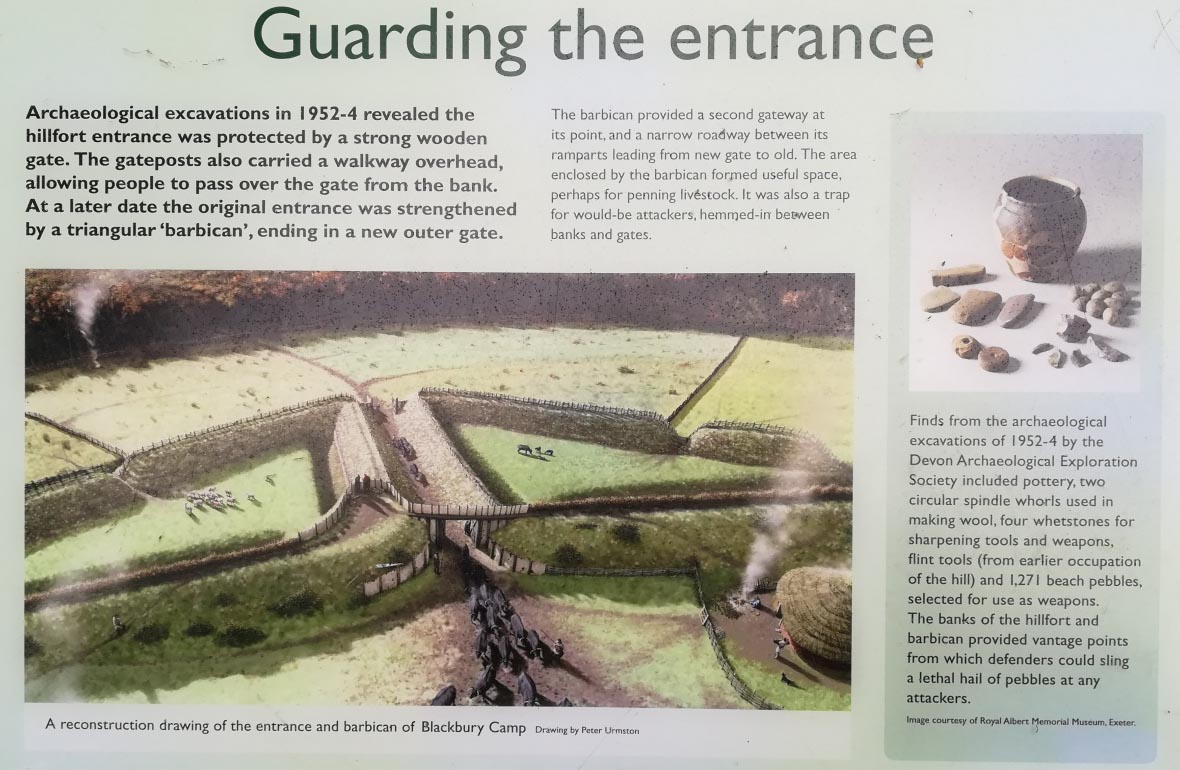
The original gateway was a timber structure set in an out‑turned passage. Excavation in the 1950s showed that the gateposts carried a walkway above, allowing movement across the top of the entrance. At a later stage the community added a triangular outer work: two new banks and ditches forming a barbican, with a narrow funnel between the outer and inner gates. The enclosed triangle may have been used for livestock, but it also created a confined approach where any attacker would be exposed on both sides. There are no close parallels for this arrangement, which makes Blackbury’s entrance one of its most distinctive features.
The 1952–54 excavations by the Devon Archaeological Society uncovered a hut site, a palisade line, trenches, a cooking pit and an oven. The finds were typical of an occupied hillfort: Iron Age pottery, iron slag, whetstones, spindle whorls, bronze fragments and worked flints. More striking was the quantity of slingstones – over a thousand selected beach pebbles, stored ready for use. The ramparts and the barbican would have given defenders a clear field of fire down the entrance passage.
Inside the enclosure two rectangular platforms are built against the inner face of the rampart. These are later additions, probably medieval or post‑medieval, and may relate to some of the breaches in the circuit. Otherwise the interior is open, the woodland floor rising gently to the banks. The monument is now in state care, with a protective margin around the earthworks to safeguard buried deposits.
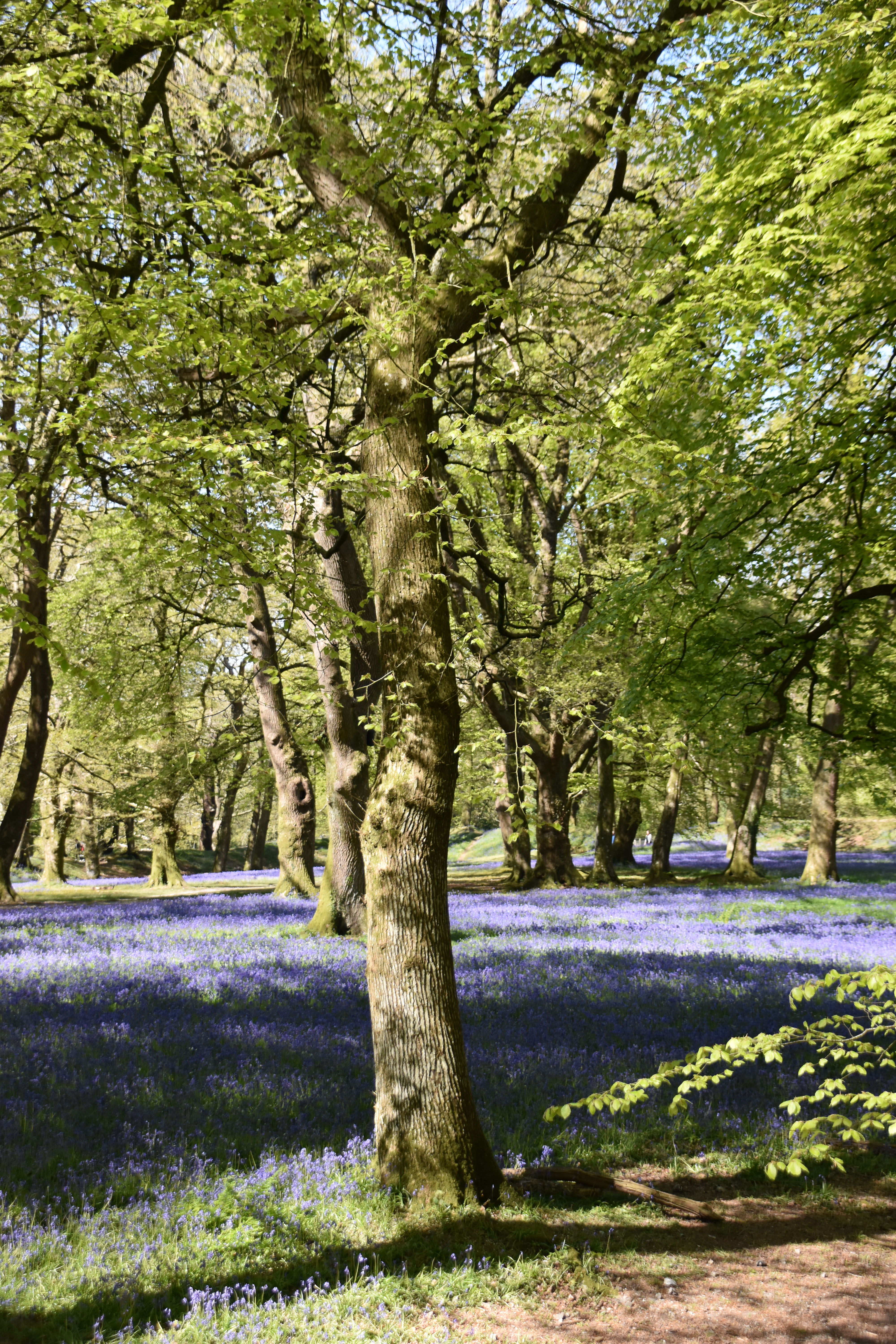
The modern visitor arrives through the southern entrance, still the most impressive part of the site. The banks of the barbican rise on either side, the original gateway just ahead, and the interior opens out beyond. Even without the timberwork, the design is easy to read. It is a rare example of a large univallate hillfort with an entrance complex that can still be understood on the ground, and it remains one of the best‑preserved sites of its type in east Devon. Without doubt though, the fort takes on a completely different aura late April and early May when bluebells run riot!