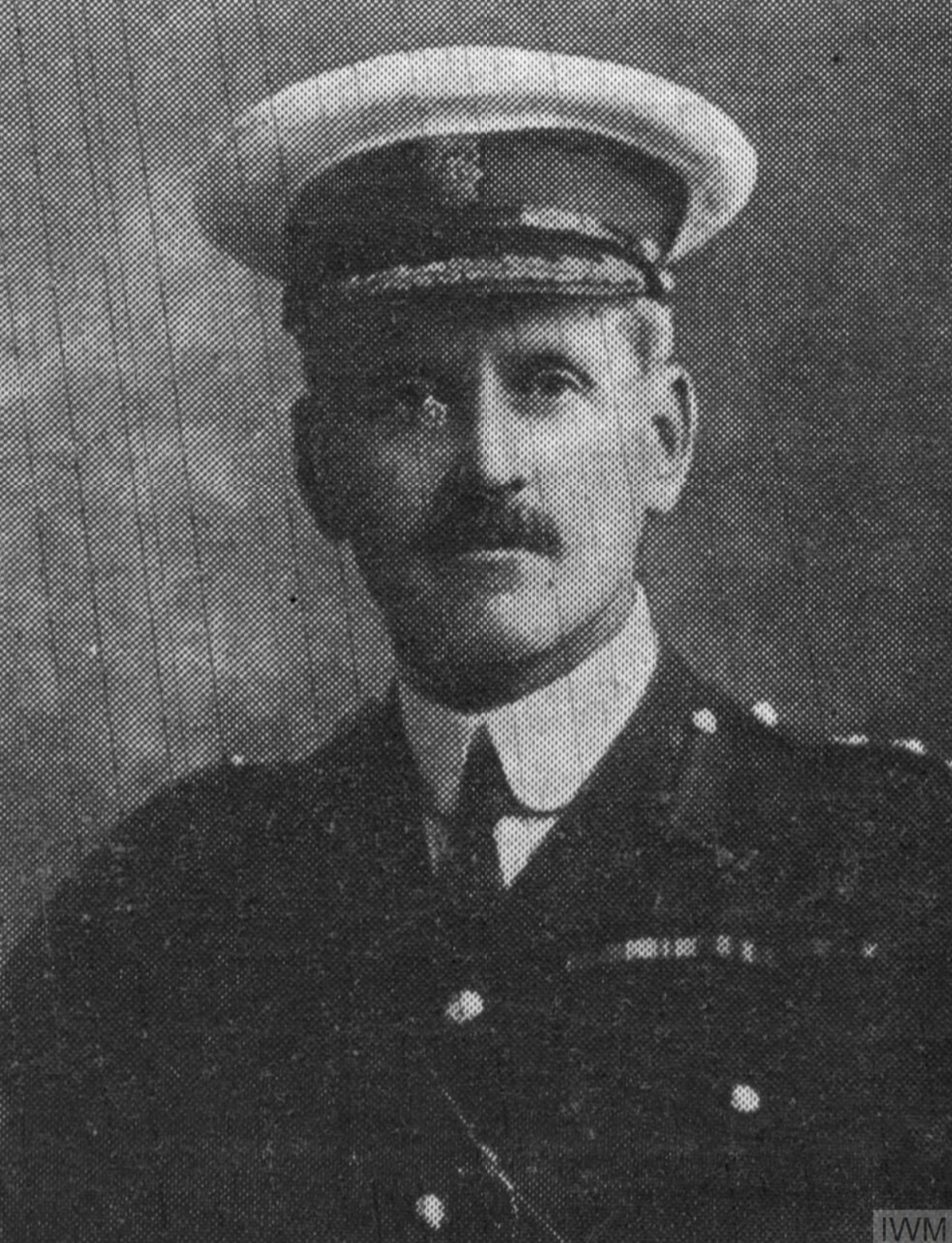
Colonel Frank Ridley Farrer Boileau was the first of those commemorated on the Lustleigh war memorial to die in the Great War. He succumbed to wounds on 28 August 1914, only three weeks after the conflict began. At 46 he was older than most of the men later listed on the memorial, whose average age is below twenty‑five, and he had already lived a full military life before the war claimed him.
Born on 28 November 1867 in Lucknow, India, Boileau came from a long military line. His father was a Colonel, his grandfather a Major General, and his uncle was Colonel Bradford of Welparke, Lustleigh. Educated at Cheltenham College, he was destined for the army. After military training he was commissioned into the Royal Engineers in February 1887 as a Second Lieutenant. Seven years’ service in India followed, and he was promoted to Captain in 1897.
As a Royal Engineer, Captain Boileau played a significant role in the British Army’s relief of the siege of Chitral in March and April 1895, an action remembered as a major victory in British military history. Further postings in Africa followed, including service with the Royal Engineers alongside the 9th Infantry Division in the South African War. He was mentioned in despatches by Lord Roberts in March 1900.
While back in England in January 1902, Boileau married Mary Aurora Tudor, daughter of Sub‑Dean Tudor, Rector of Lustleigh, at Newton Abbot. Since her father’s death, Mary Tudor had been an advowson of the parish of Lustleigh. The marriage strengthened Boileau’s connection to the village.
From 1906 he spent four years in India teaching at the Staff College in Quetta, Baluchistan. He was promoted to Colonel on 21 January 1910 and was serving with HS3 Division as GSO 1 (General Service Officer) when the Great War began.
The 22nd of August 1914 was the bloodiest day of the entire Western Front campaign, with the French alone losing 27,000 dead. Four days later, on 26 August, Colonel Boileau was wounded at Ham, France, immediately before the battle of Le Cateau. He was evacuated to a military hospital in Boulogne but died of his wounds on 28 August. He is buried at Terlincthun British Cemetery near Boulogne, Plot 16 Row AB, Grave 1.
The battle of Le Cateau was an extraordinary action by the British under General Sir Horace Smith‑Dorrien against advancing German forces. Unlike the earlier battle of Mons, where rifle fire caused most casualties, Le Cateau was dominated by artillery, demonstrating the devastating effect of modern quick‑firing guns using air‑bursting shrapnel shells on infantry advancing in the open.
After the war, his widow Mary A. Boileau lived at Windout Hill House, Exeter. She died in 1958 aged 83. They had three sons: Etienne Henry Tudor, Peter Claude and Hugh Even Ridley. In the Lustleigh Parish Magazine of October 1914, the rector Herbert Johnson wrote that “the death of Colonel Boileau had touched many hearts in Lustleigh, and that Lustleigh should feel some of the pride as well as of the sorrow caused by his death – R.I.P.”
In August 1916 the Parish Magazine noted that a memorial tablet to Colonel Boileau for the south wall of Lustleigh Church had been approved. The September issue recorded that it had been installed. Mrs Mary Boileau and her three sons attended the dedication service on 26 September. The rector wrote: “There will, we think, be a general admiration of its taste, execution and agreement with its position and surroundings.”
Colonel Frank Boileau is also listed on the village memorial at the foot of Mapstone Hill, erected a few years after the war. His name stands among those of much younger men, marking both his long military service and Lustleigh’s early loss in the Great War.
Image below courtesy of IWM