 |
|
|
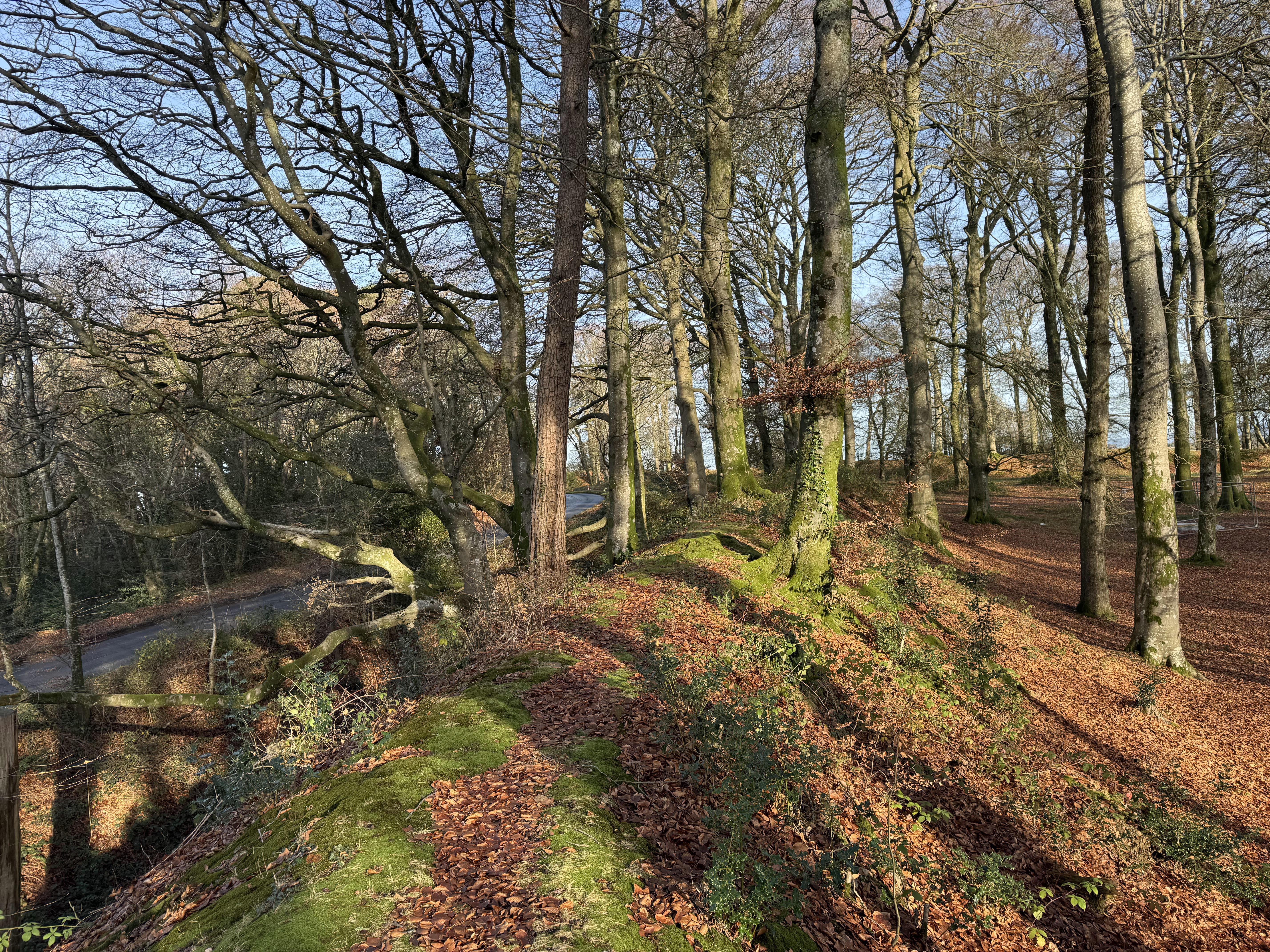
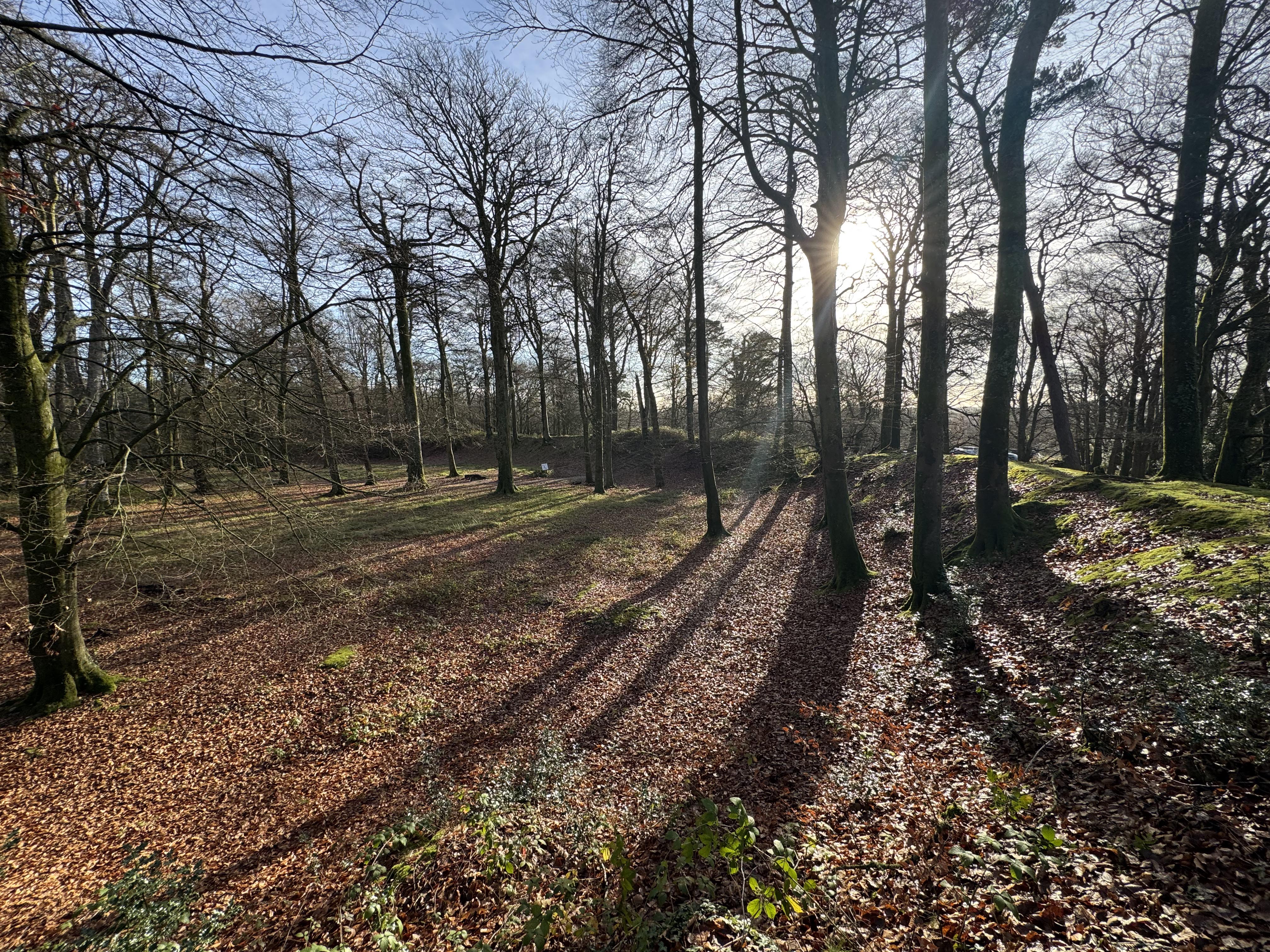
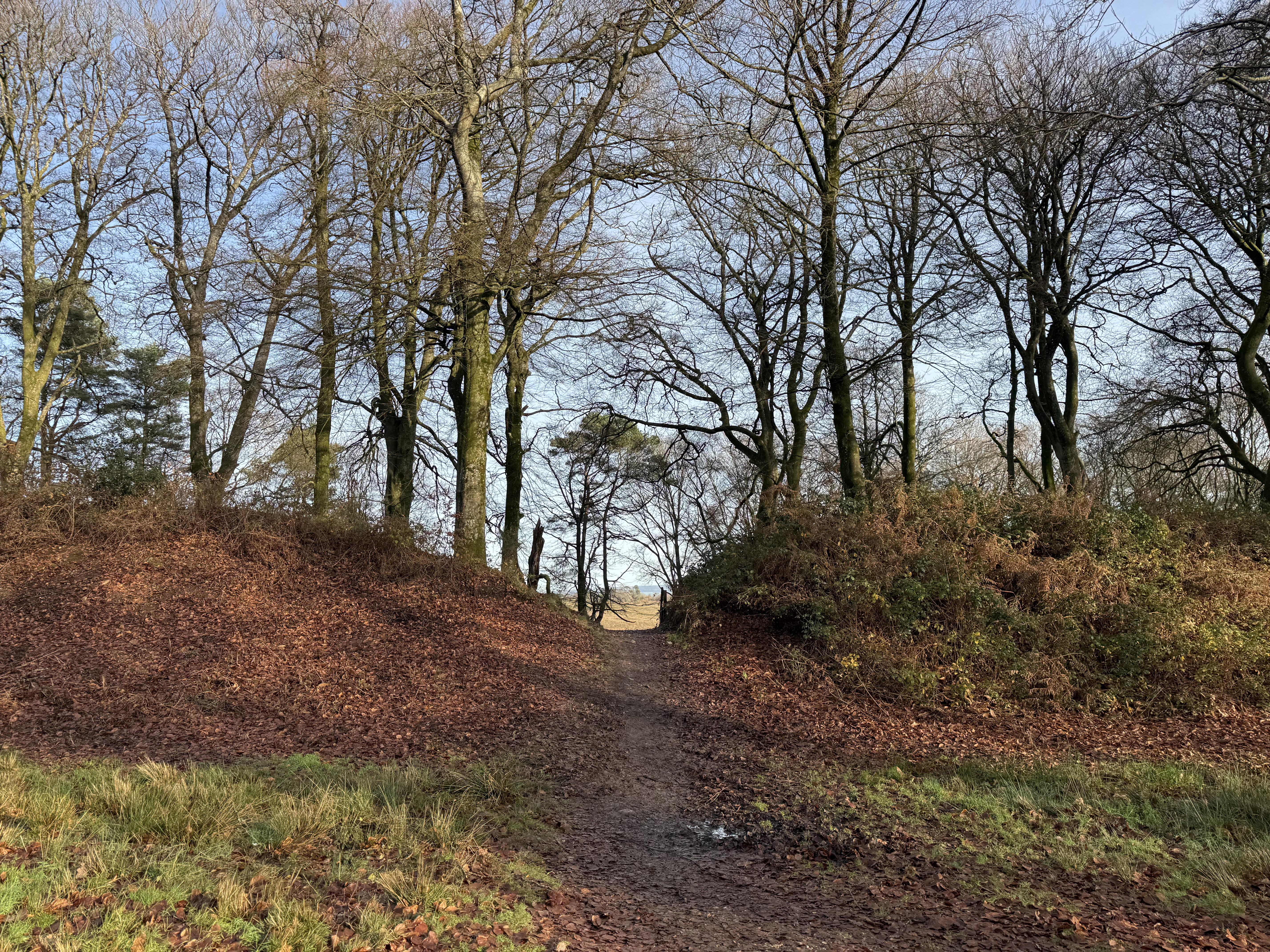
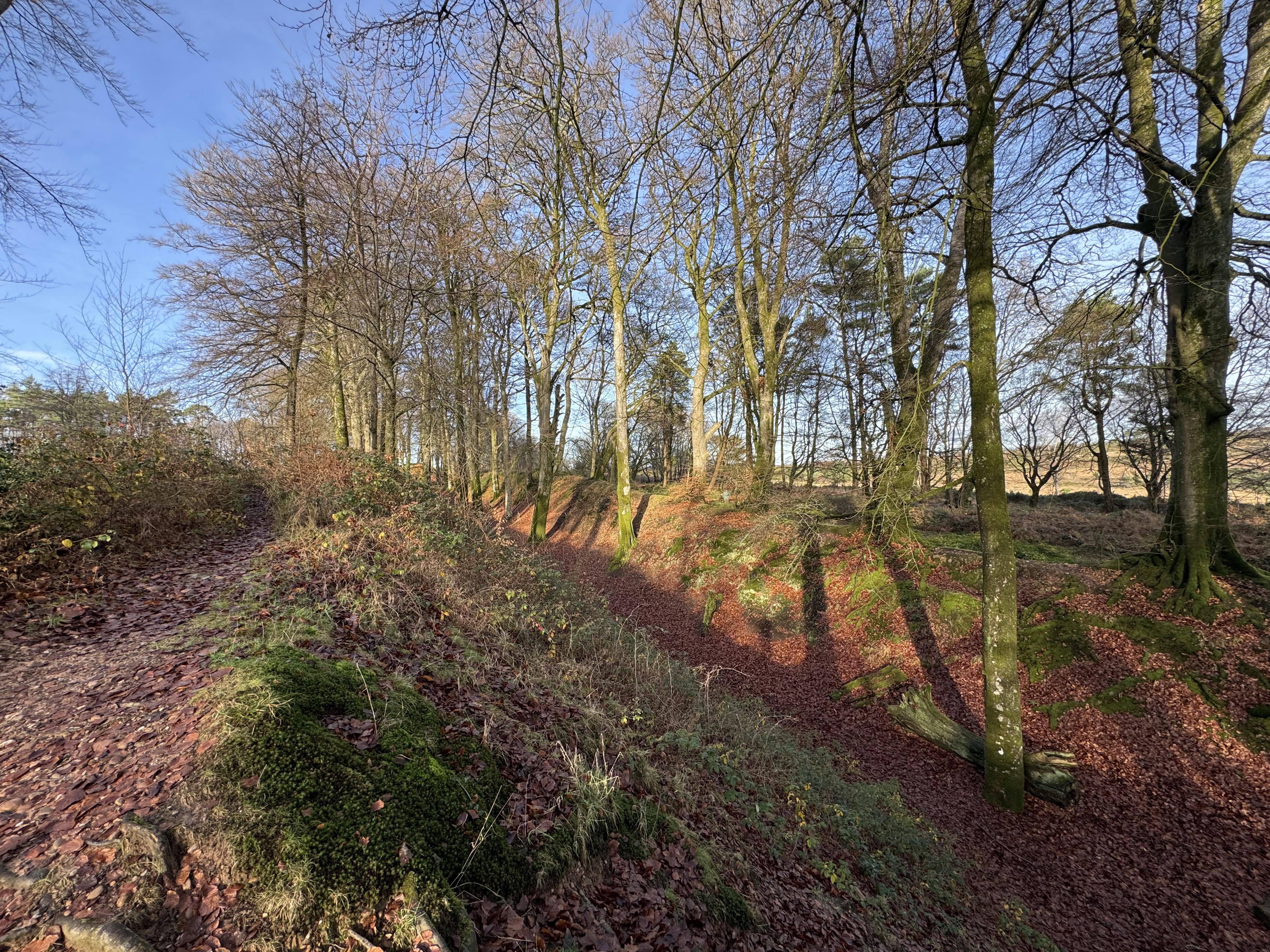
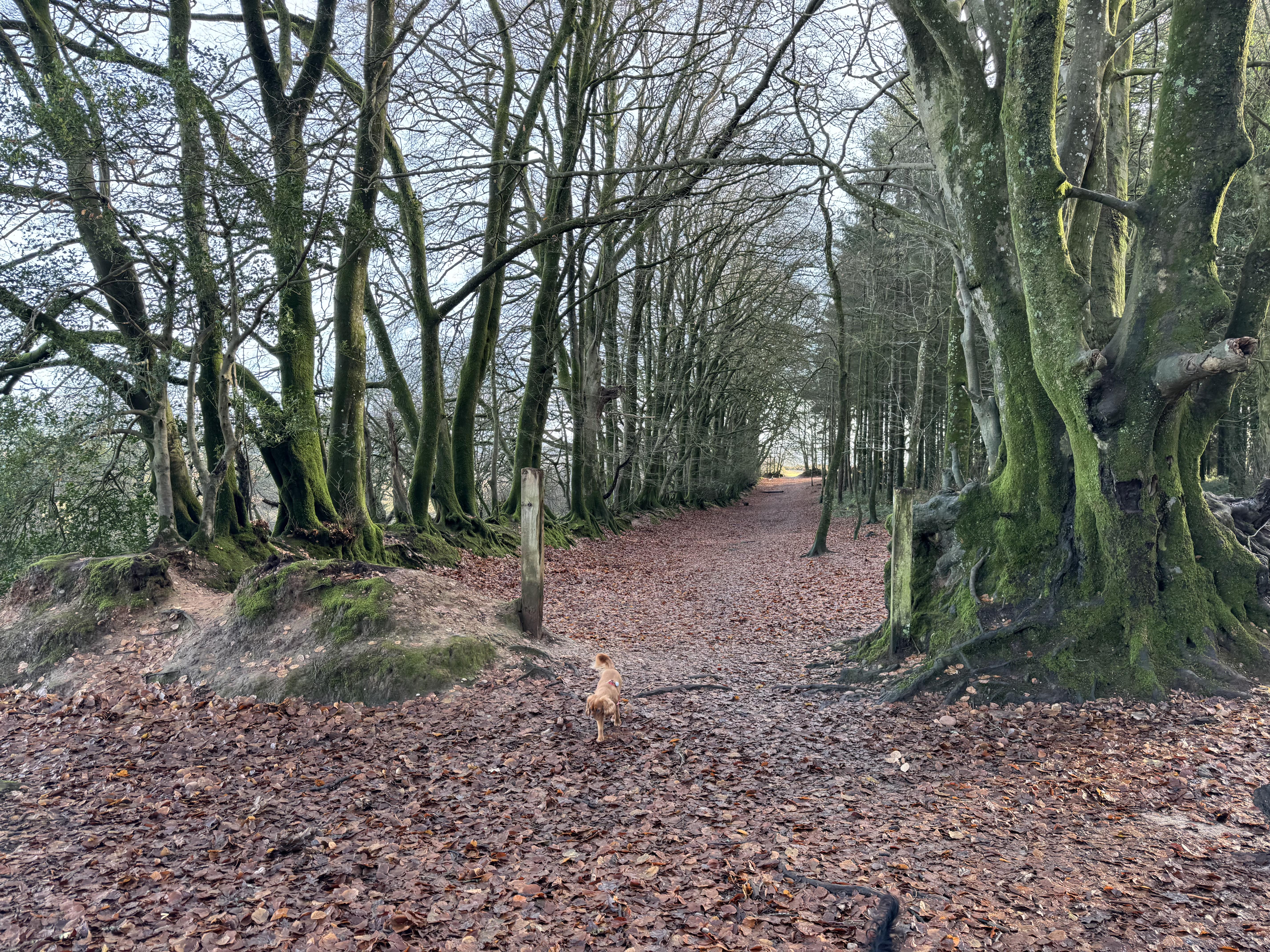
Another walk in the lead up to Christmas. There is a very well placed, if very active, car park right next to Woodbury Castle which of course rather confusingly is actually the location of a fort rather than a castle! Iron Age hill forts never fail to awe you with their size and scope. This particular one is probably two and a half thousand years old. But you can clearly make out the ramparts and I’m sure it wouldn’t take some engineers long to convert it back into a defensible structure without much difficulty at all. Interestingly the Royal Marines have their main basic training base within sight of this hill fort. I’m sure they would make remarkably light work out of fortifying this fortification! The size always gets you as well, but of course they were built specifically to allow the local population to find refuge in times of war. When civil engineers were widening the B3180 they discovered the full extent of the glacis-style rampart construction: layers of tamped earth and stone designed for slope stability. They also discovered a substantial granary raised off the ground to keep their grain dry and safe in peace and war! One generation of engineers were very much in awe of the construction skills of their Iron Age predecessors.
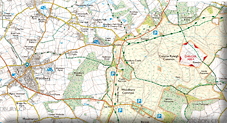
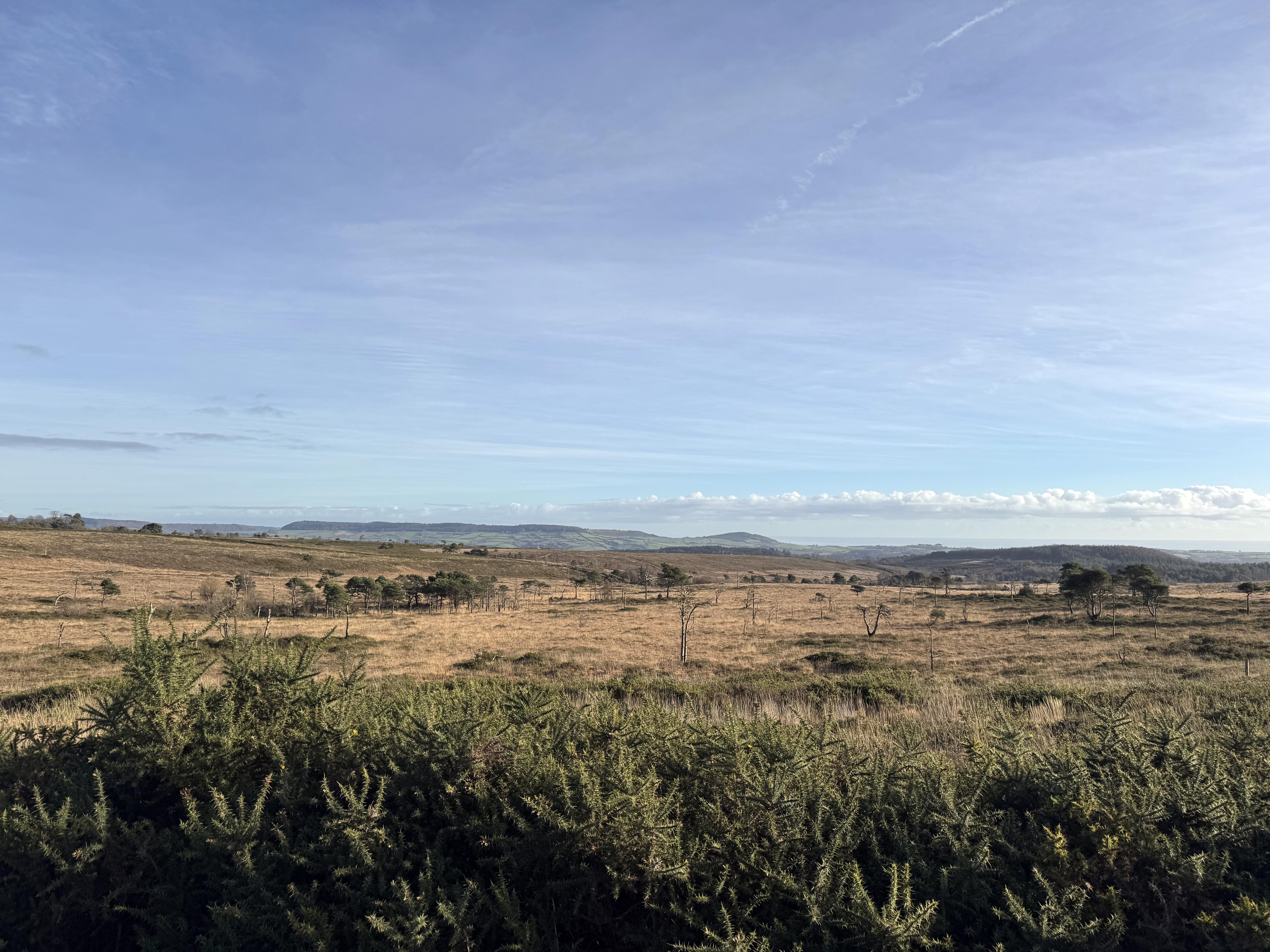
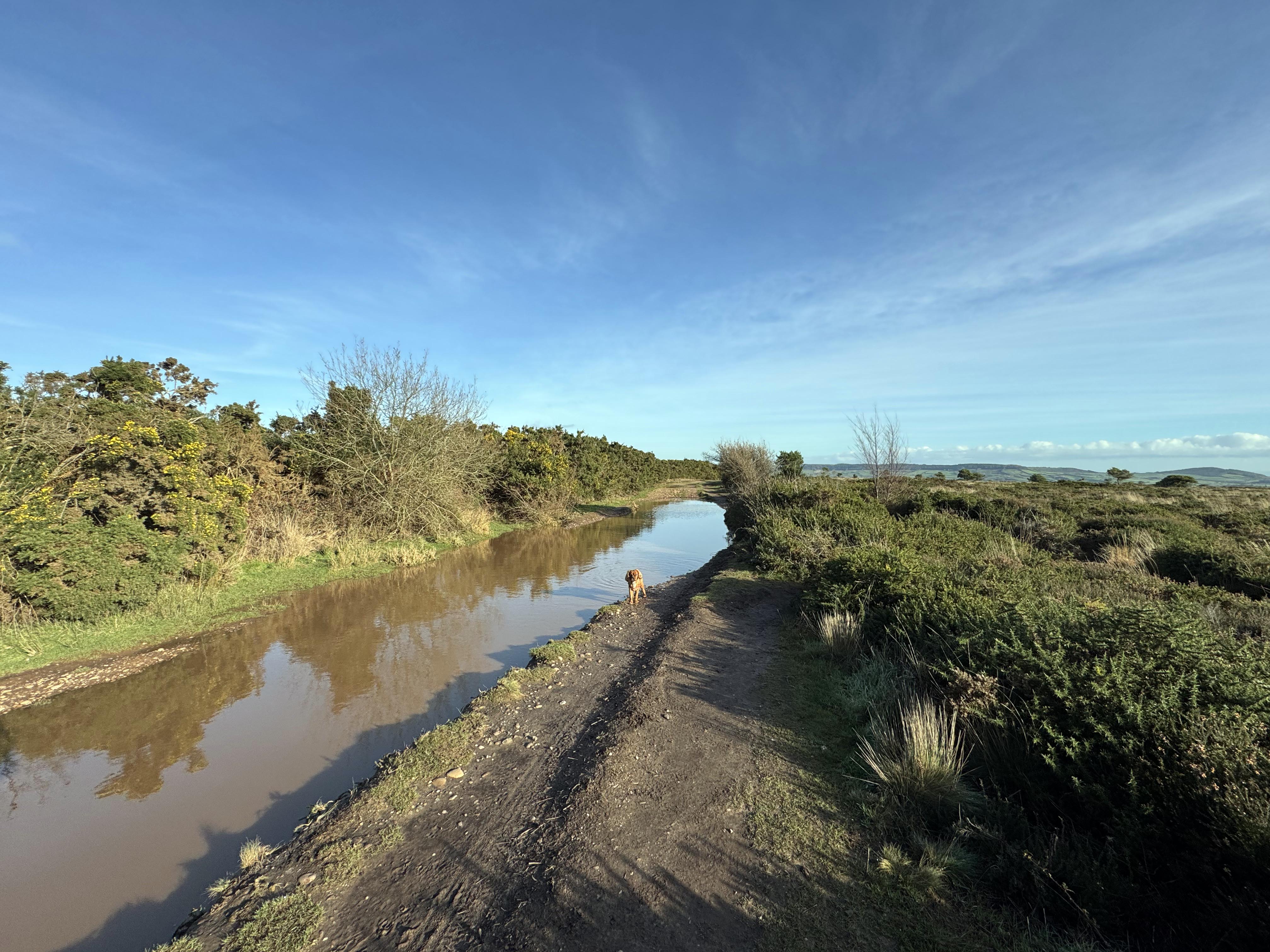
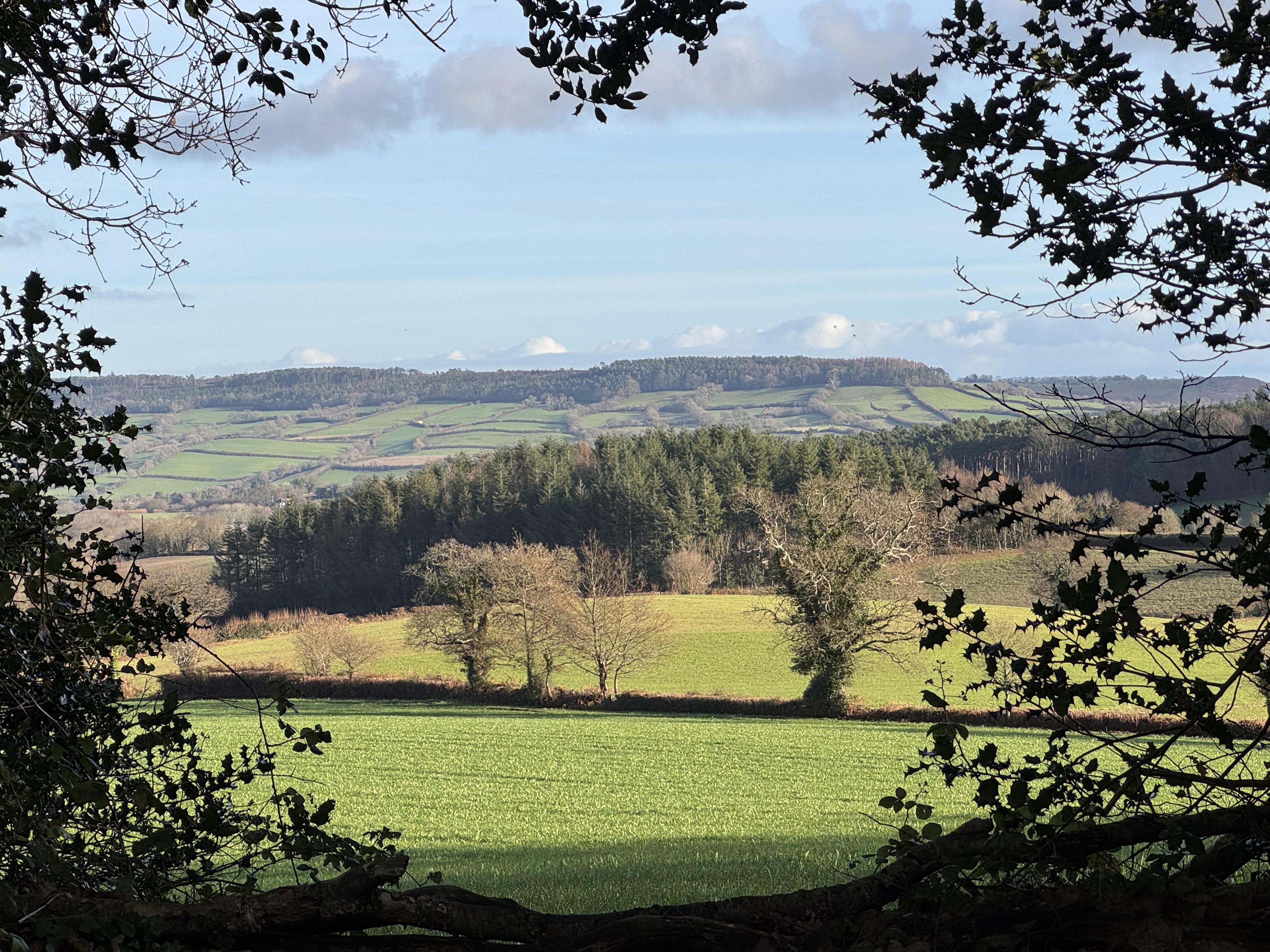
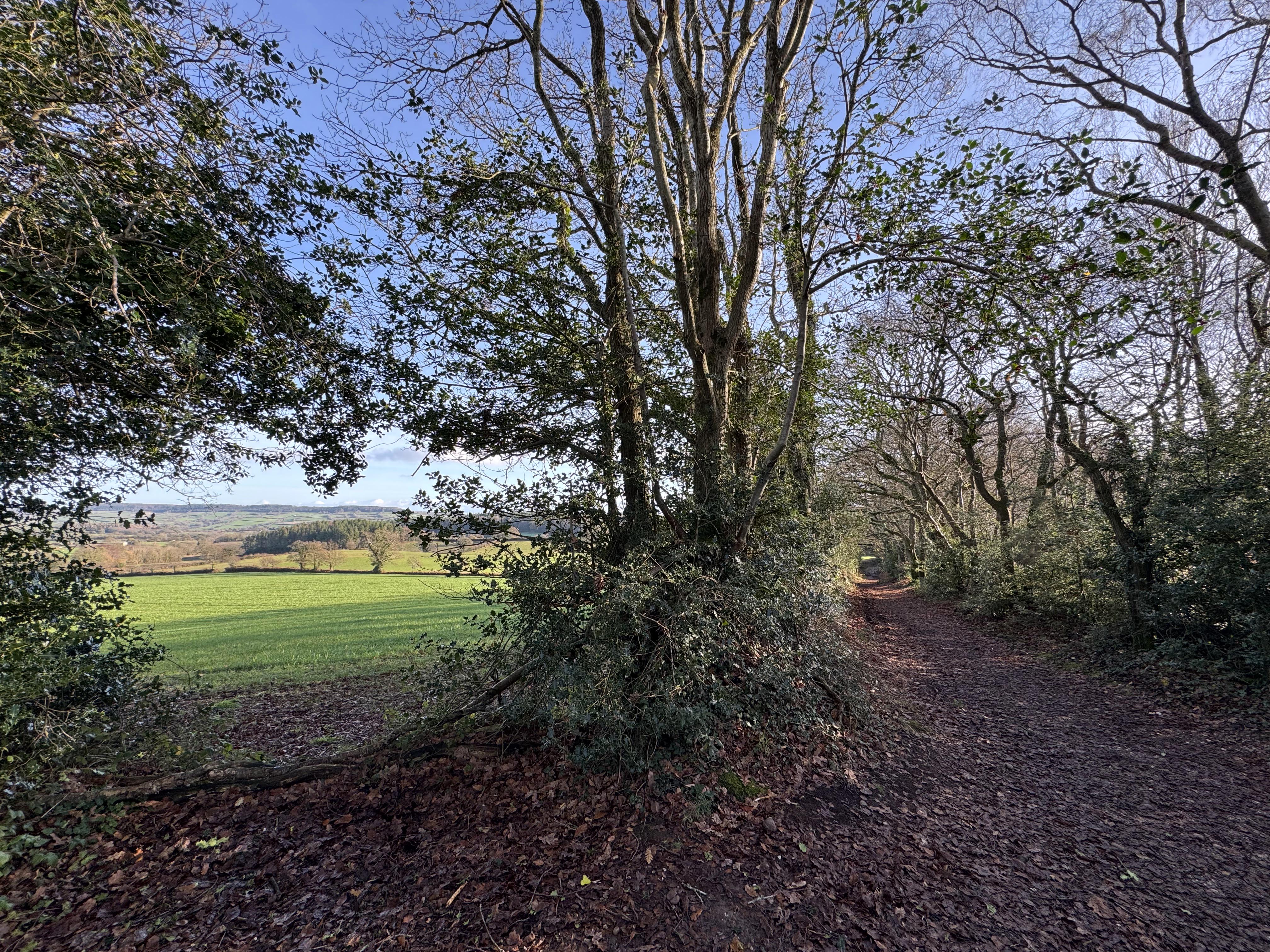
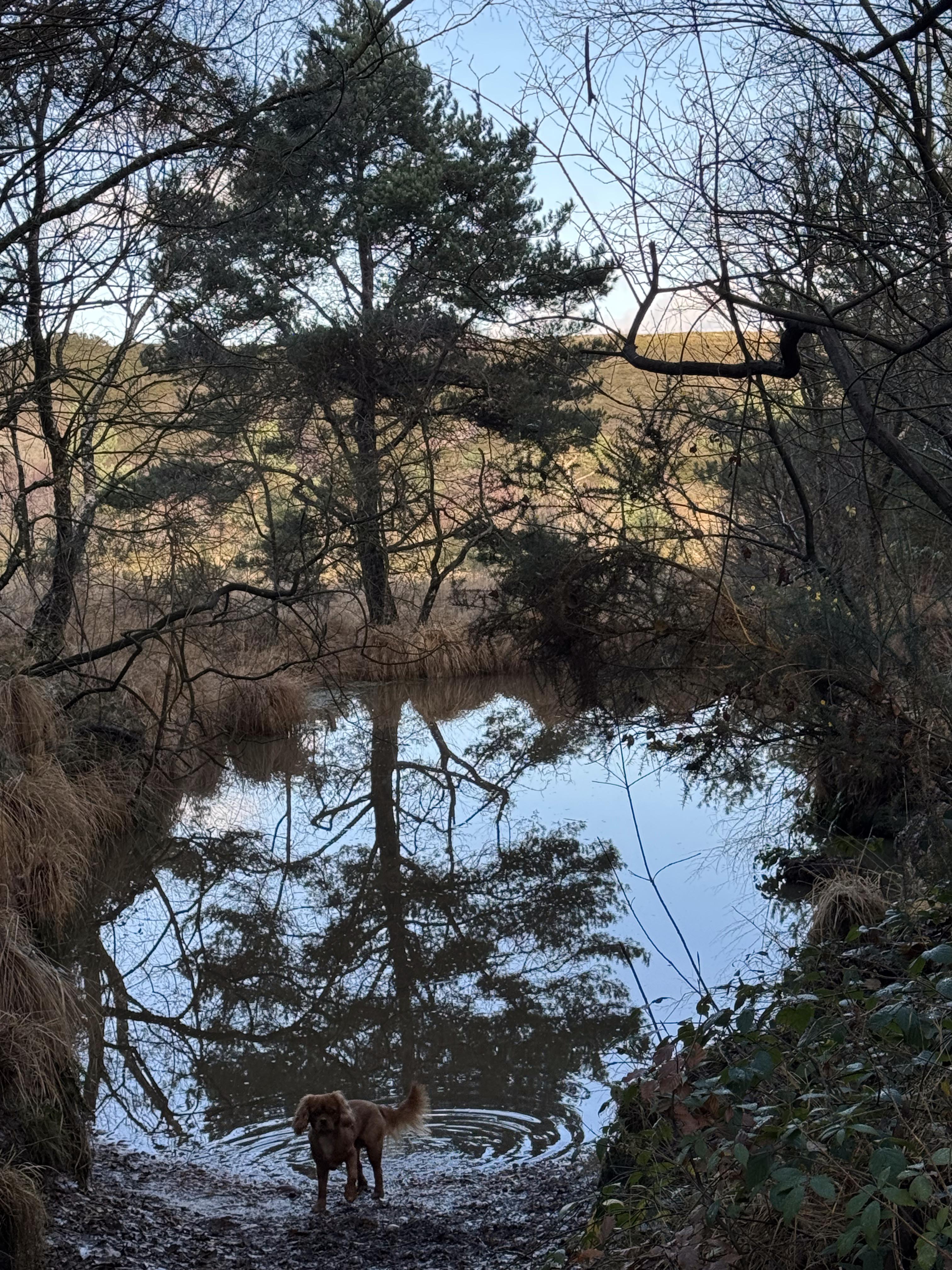
From here we followed the East Devon Way marked route north from the fort. There are quite a few Tumuli that you can divert to see but on this crystal clear day there were magnificent views eastwards over Colaton Raleigh towards the Otter Valley. Colaton Raleigh Common has a fascinating pebblebed heath ecosystem, created by deep beds of rounded quartzite pebbles laid down by ancient rivers around 240 million years ago. Theoretically the soil should drain quickly, but given how much rain we had had recently you could have fooled me and Rupert with the number of substantial puddles we came across. It is a fragile landscape supporting species uniquely adapted to its conditions, and the area around Woodbury is said to be the finest pebblebed heath anywhere in Europe. It is interesting that many of the local houses and buildings in Woodbury when we got there later had used these pebbles to decorate their walls in a very distinctive manner.
 |
|
|
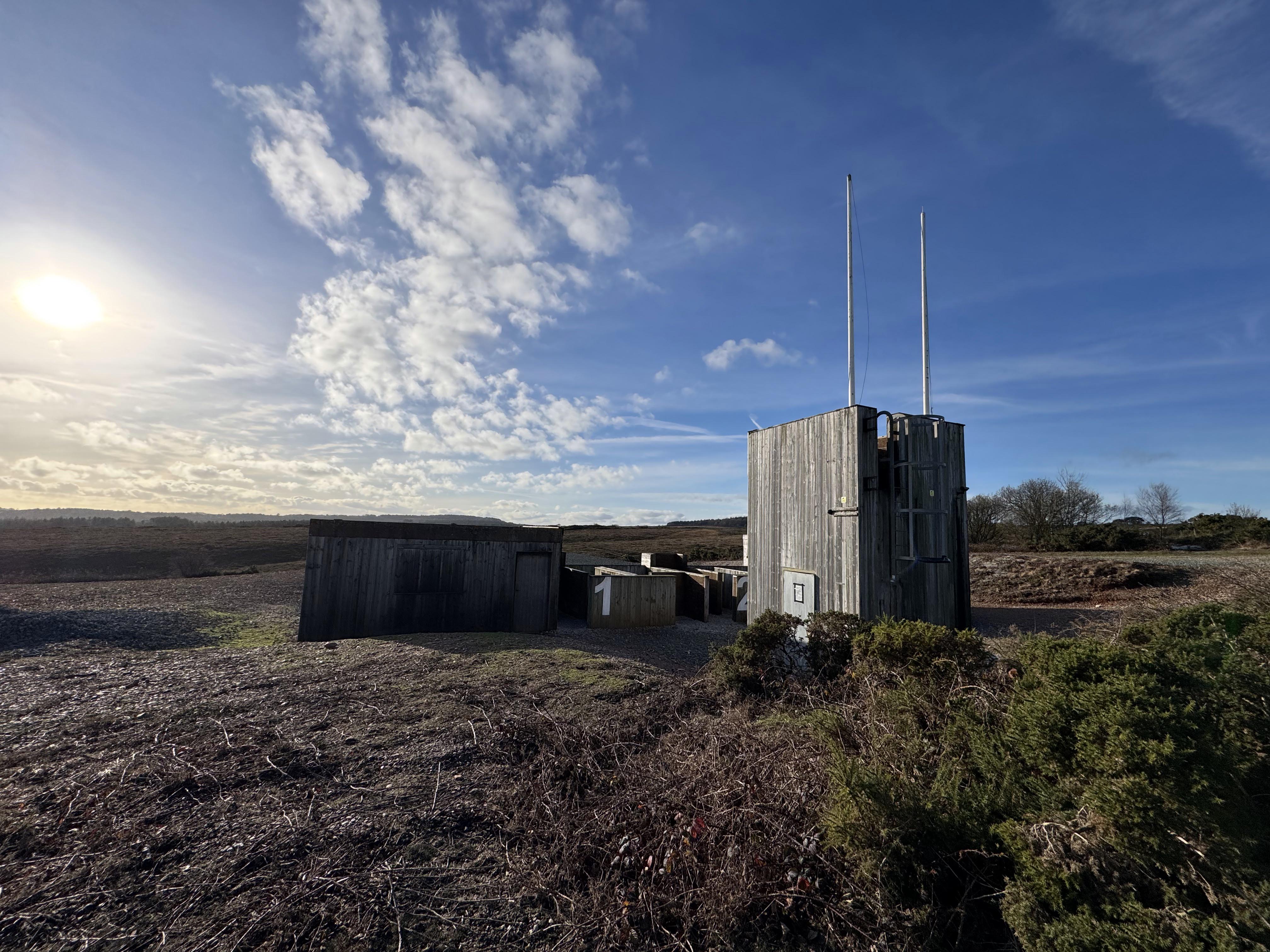
In addition to nature adapting to using this unique ecosystem, the military use it too and there is a very imposing military structure slap bang in the middle of the common land. As I mentioned earlier, the Royal Marines are trained nearby at Lympstone (with the longest basic training of any military formation in the world at a hefty 32 weeks length). Part of their training involves practicing how to use grenades in this rather idyllic and isolated location. You see plenty of rifle firing ranges around, but grenade ranges are few and far between. You can see the chunky construction to keep new recruits safe from the weapons they are throwing. It is appropriately sealed off and there are security cameras all over it but you can get a good view of the site and presumably of any recruits should they be learning how to throw grenades as you pass.
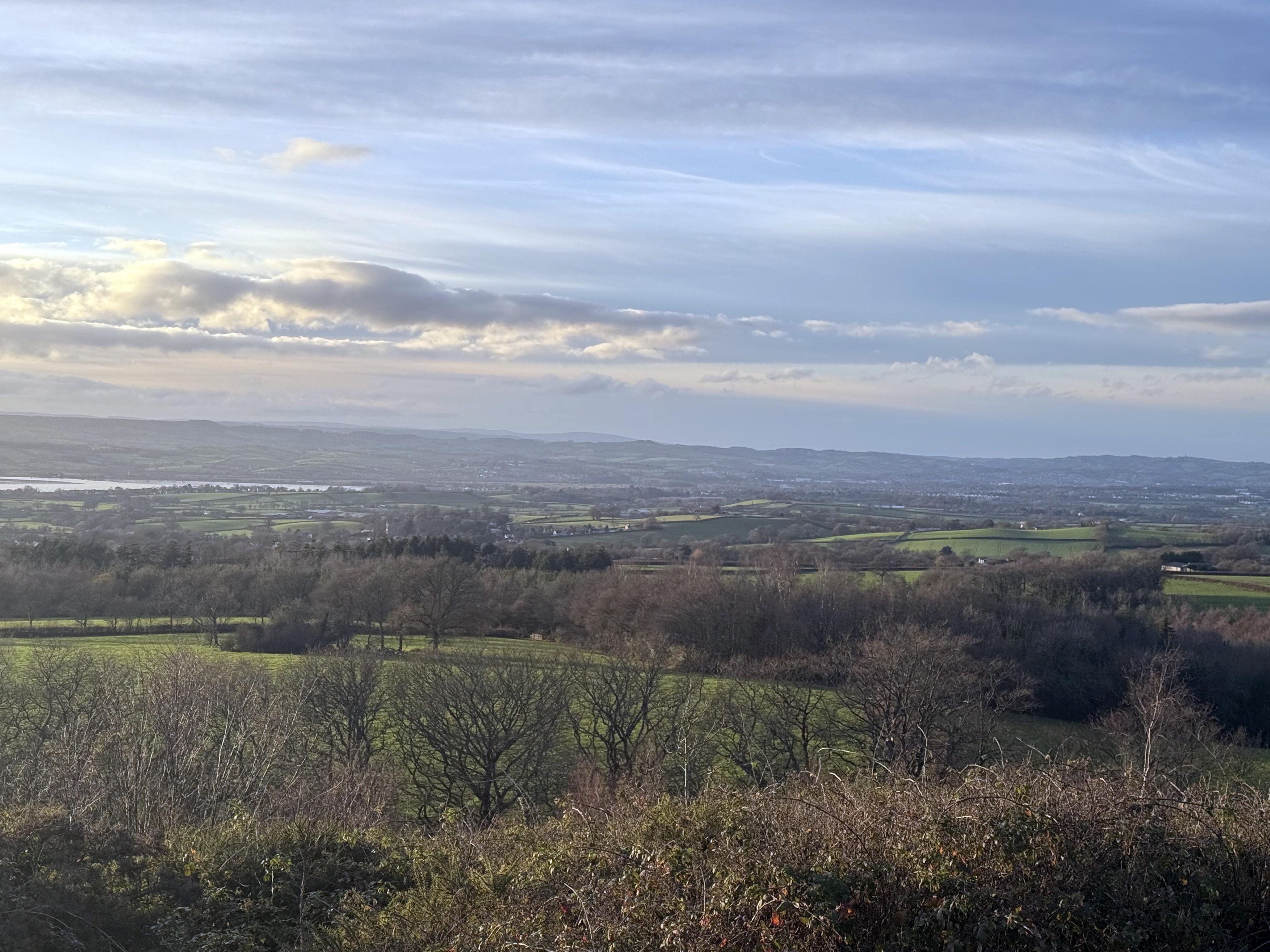
We walked down some lovely old bridle paths to a ford over a stream on its way to the River Otter. Here we turned left and headed back up towards Woodbury Castle but instead of returning to the car crossed over the B3180 to see some magnificent views out over the Exe Estuary. You could see many of the other locations we had walked recently from Haldon Belvedere northwest from us or to Powderham to our southwest. Indeed you can see down to the Exmouth and Dawlish and the coastal path route. It really is a superb viewpoint.
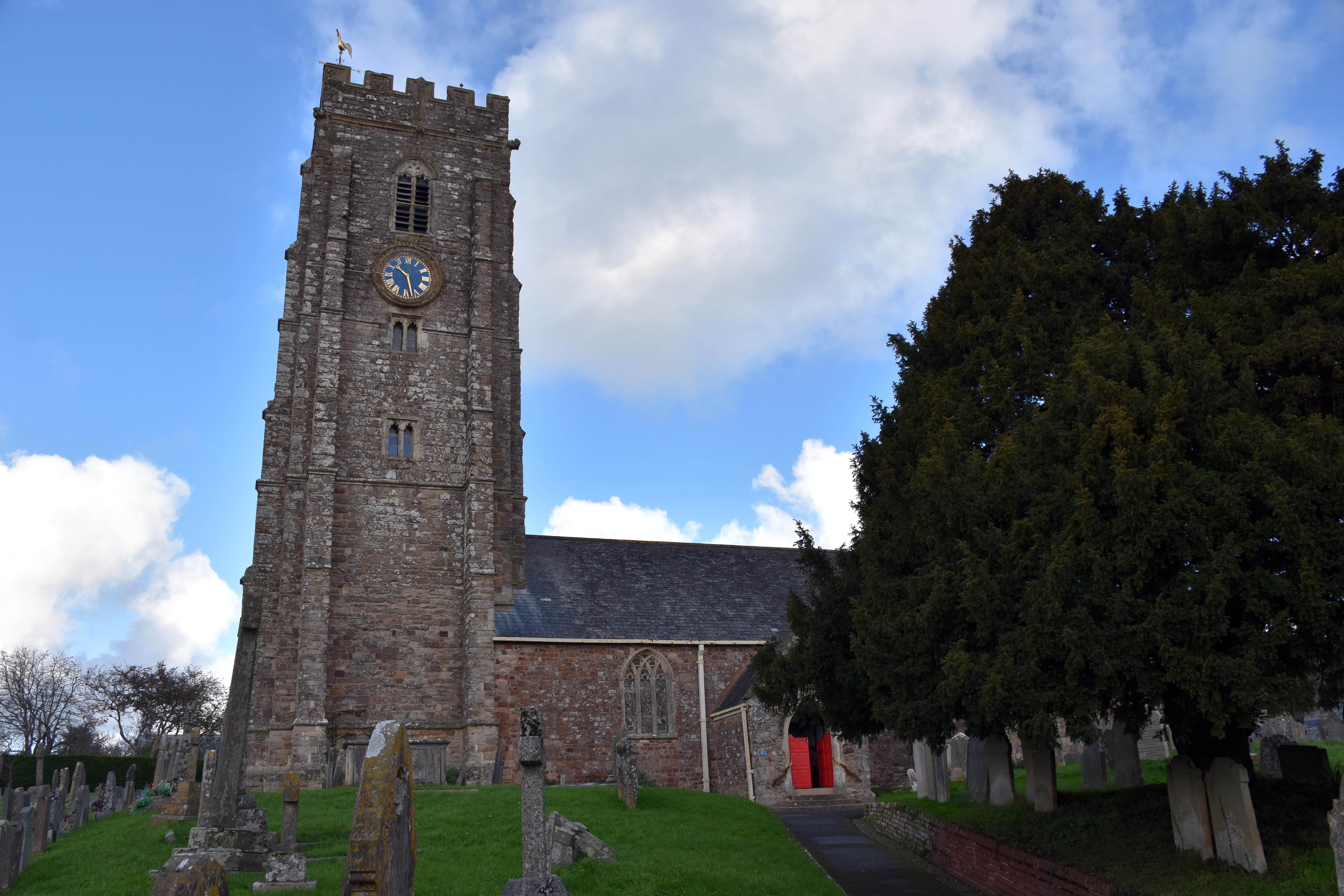
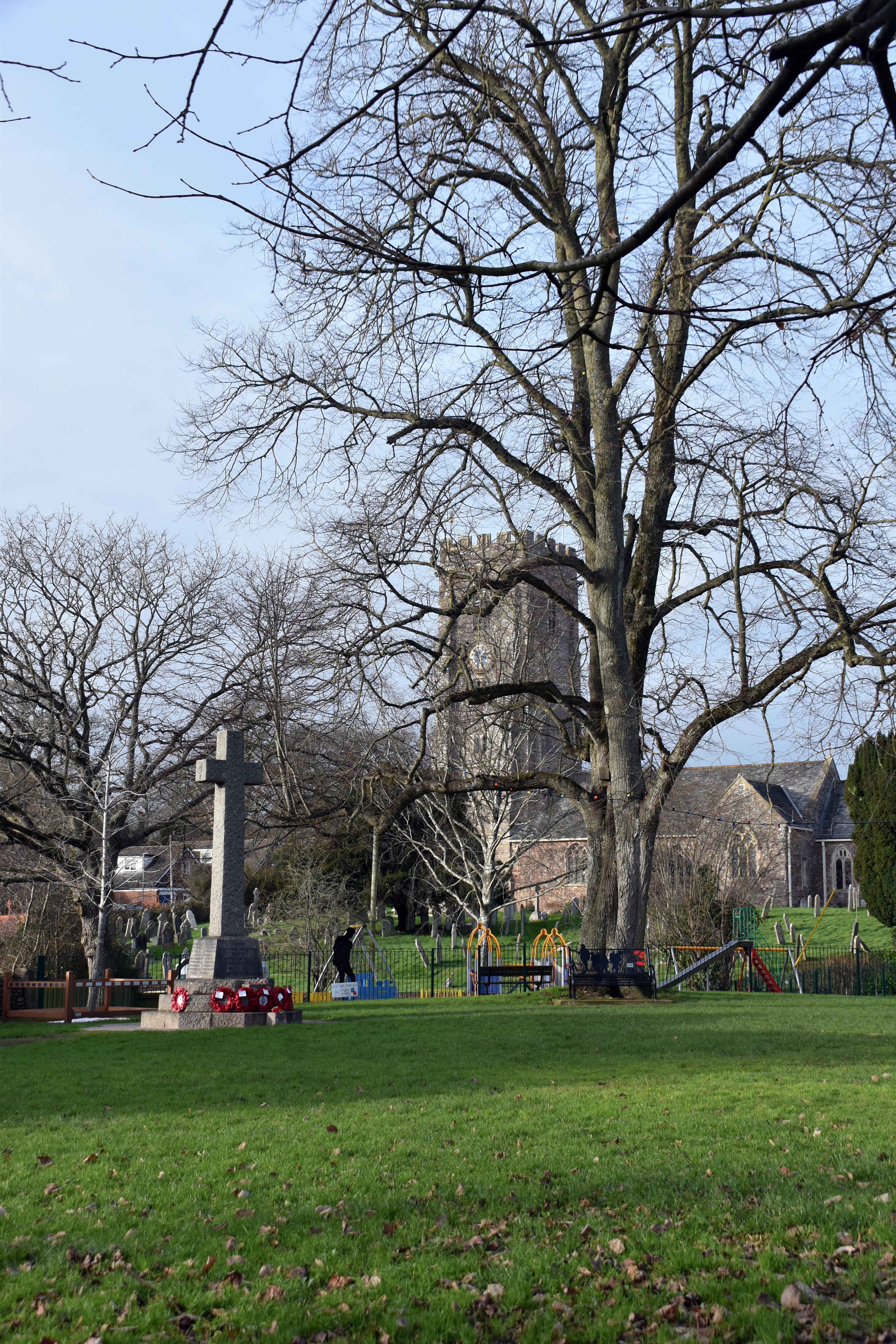
We then headed through Woodbury Wood towards Woodbury to get to the lovely St. Swithun’s church down below. It is quite a long way down from the Woodbury Common plateau but well worth a visit especially due to its rather special church St. Swithun’s.
 |
|
|
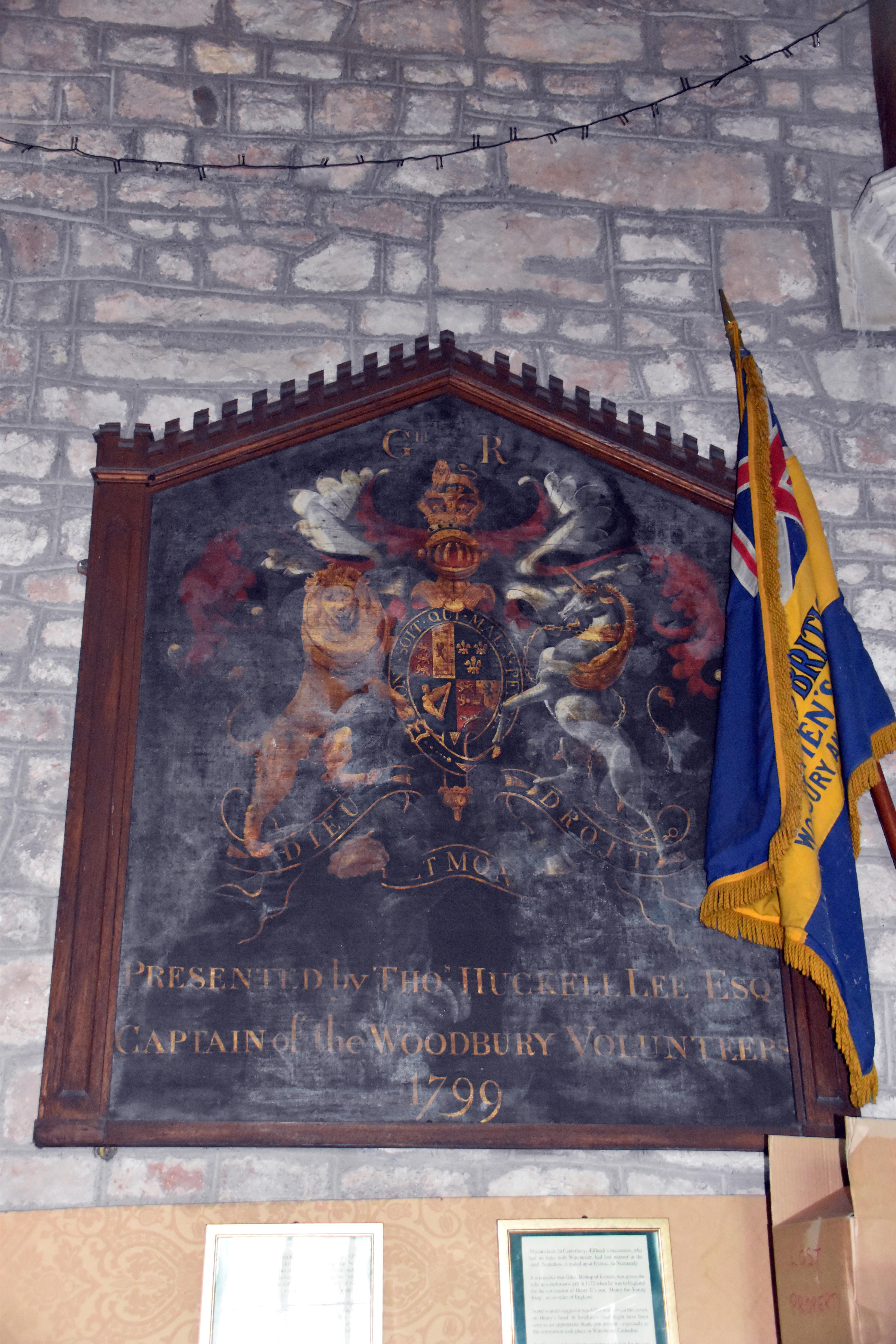
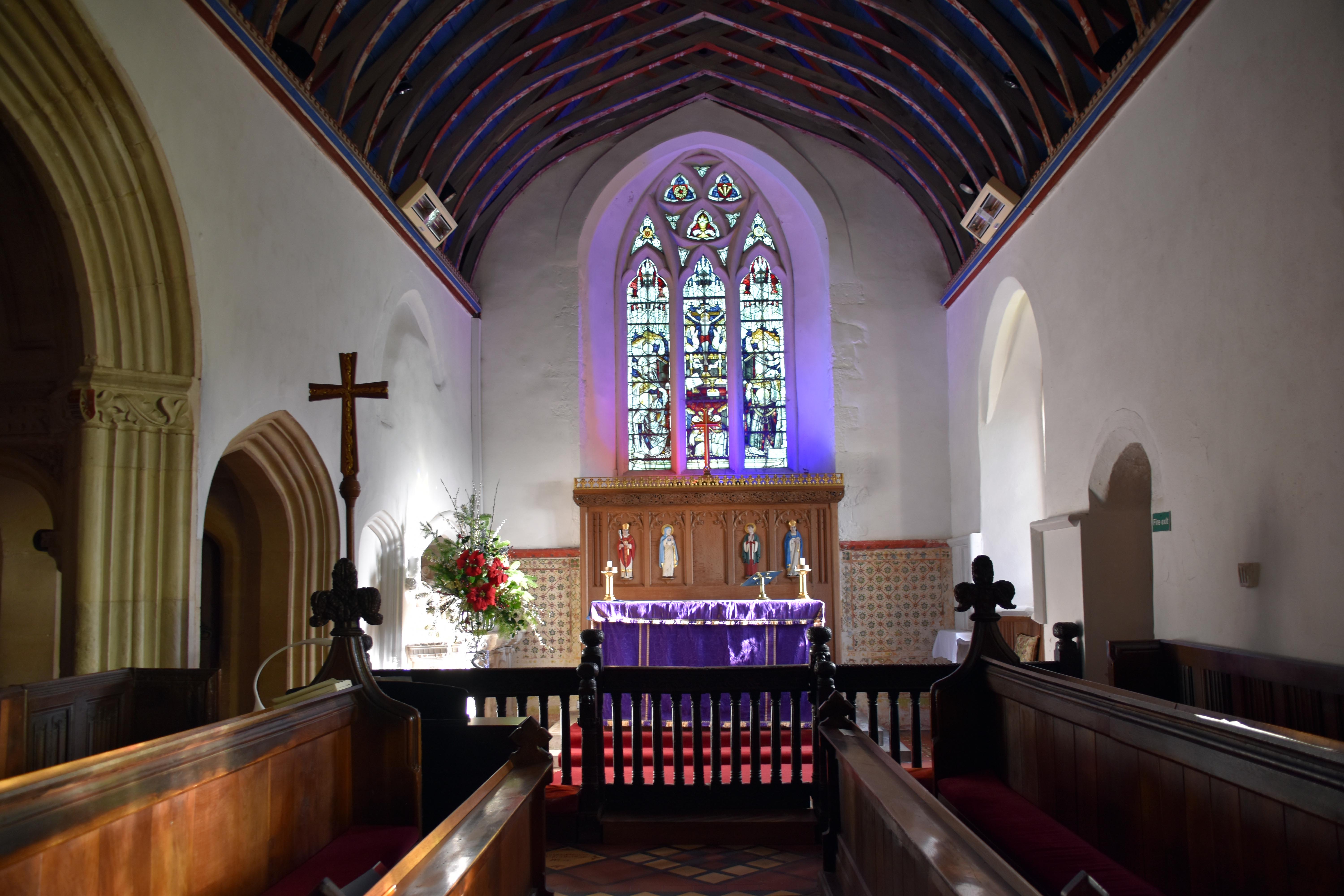
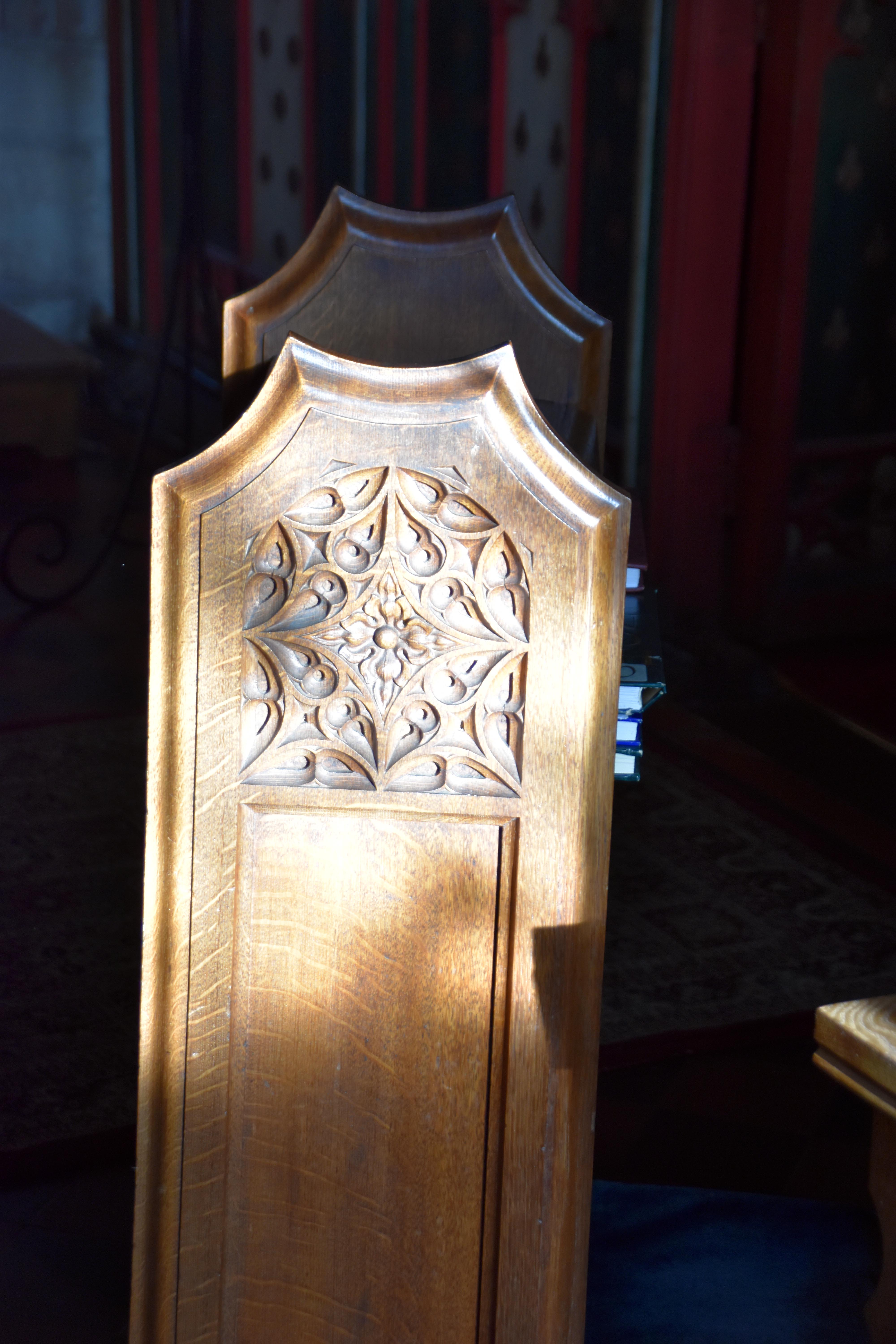
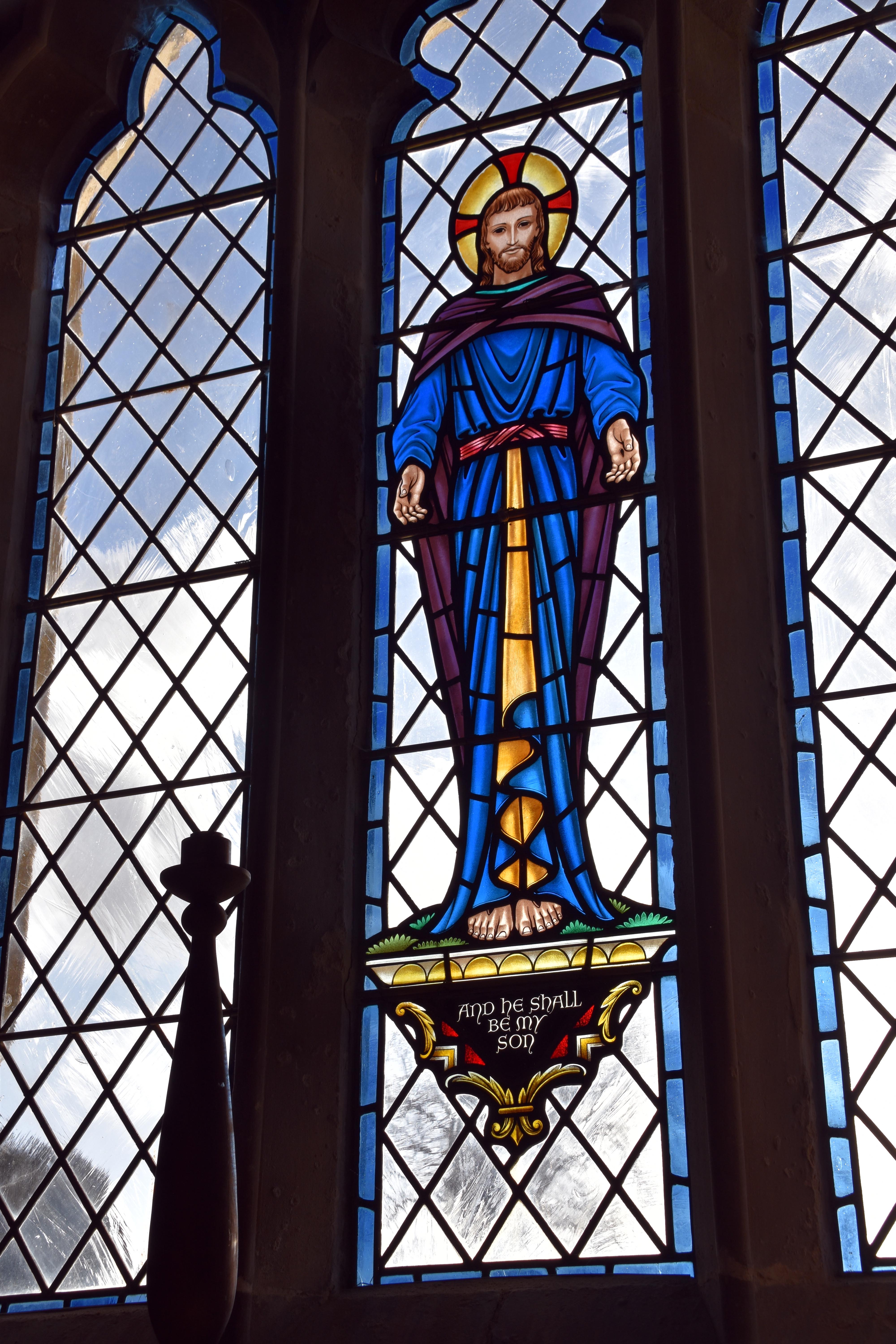
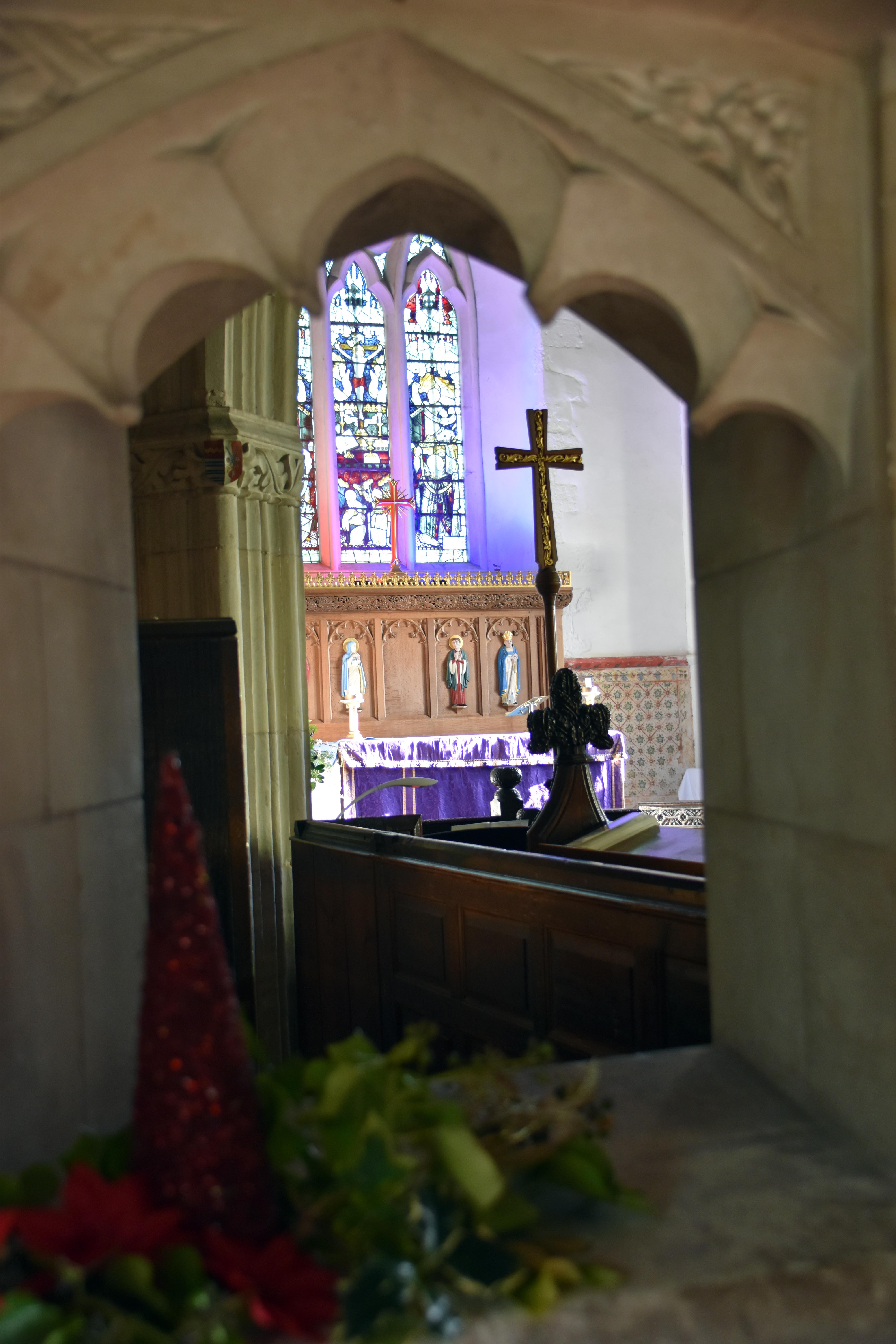
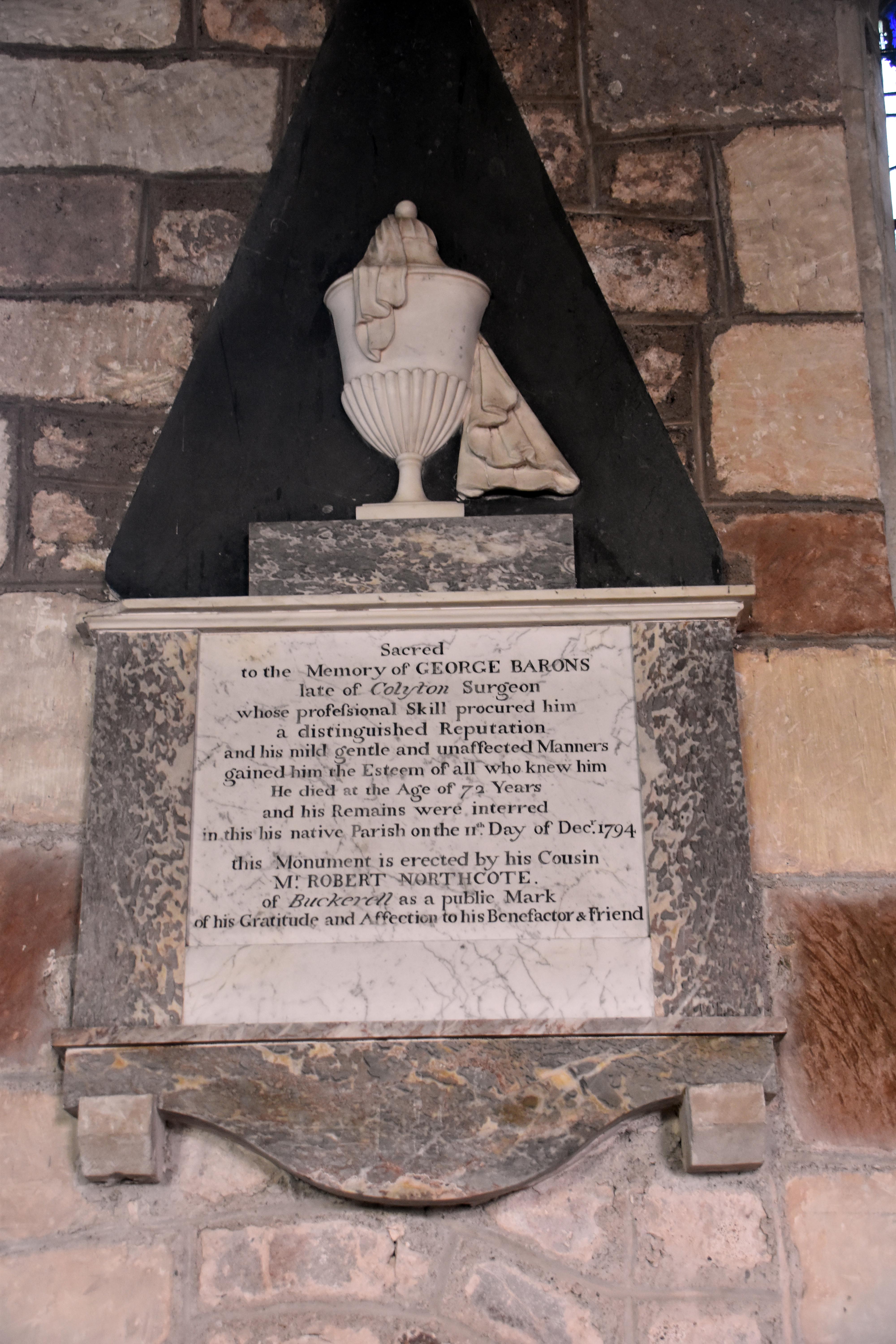
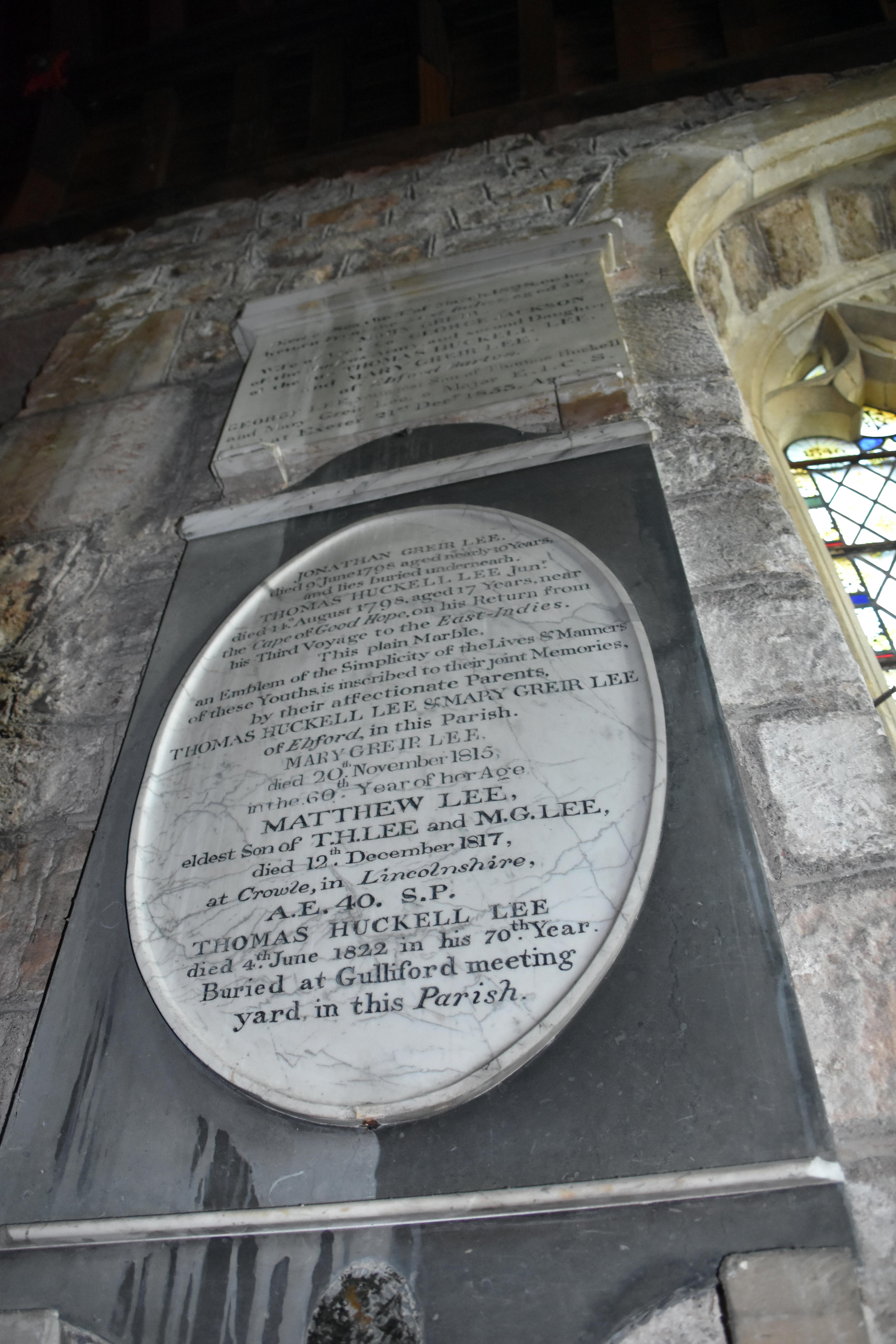
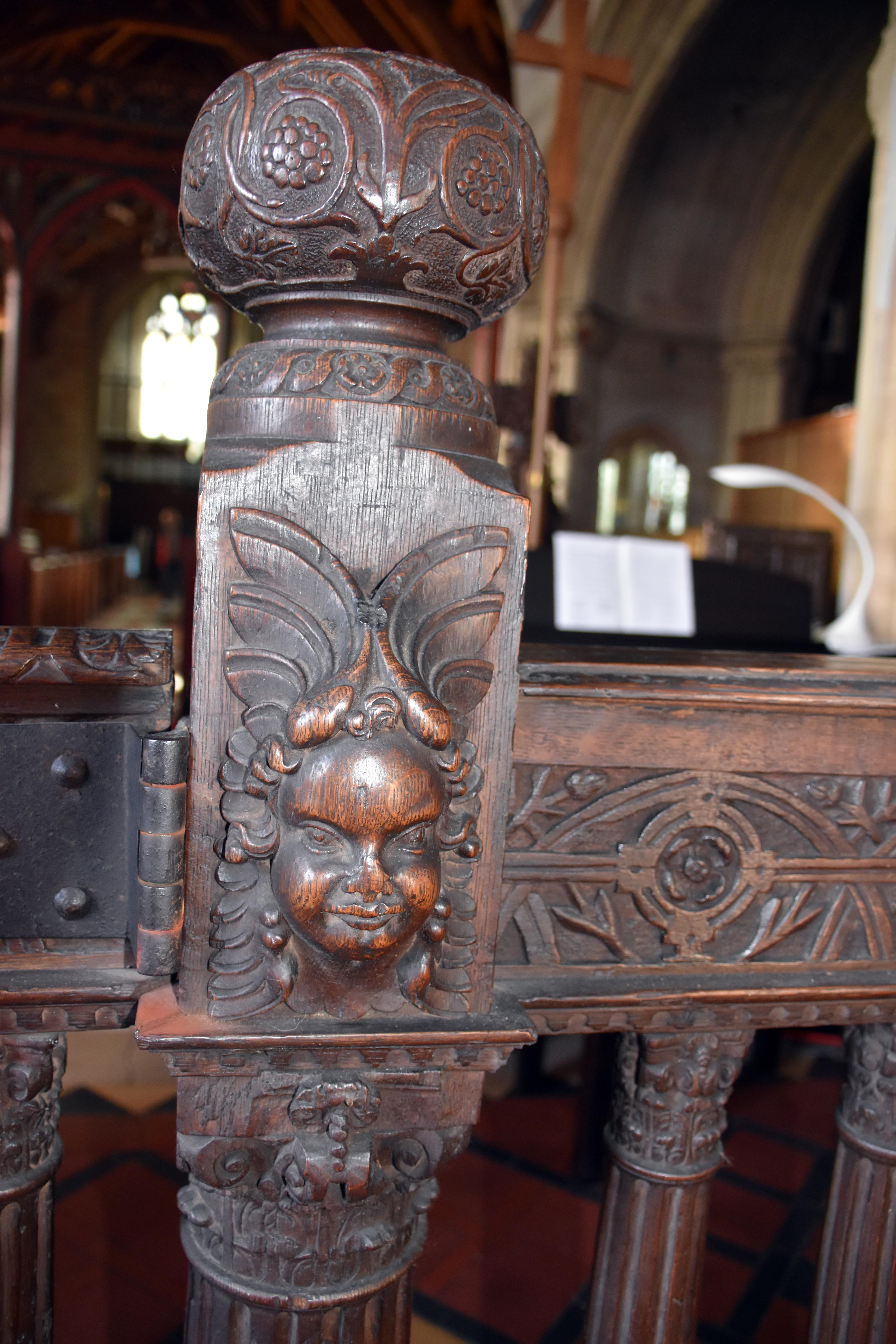
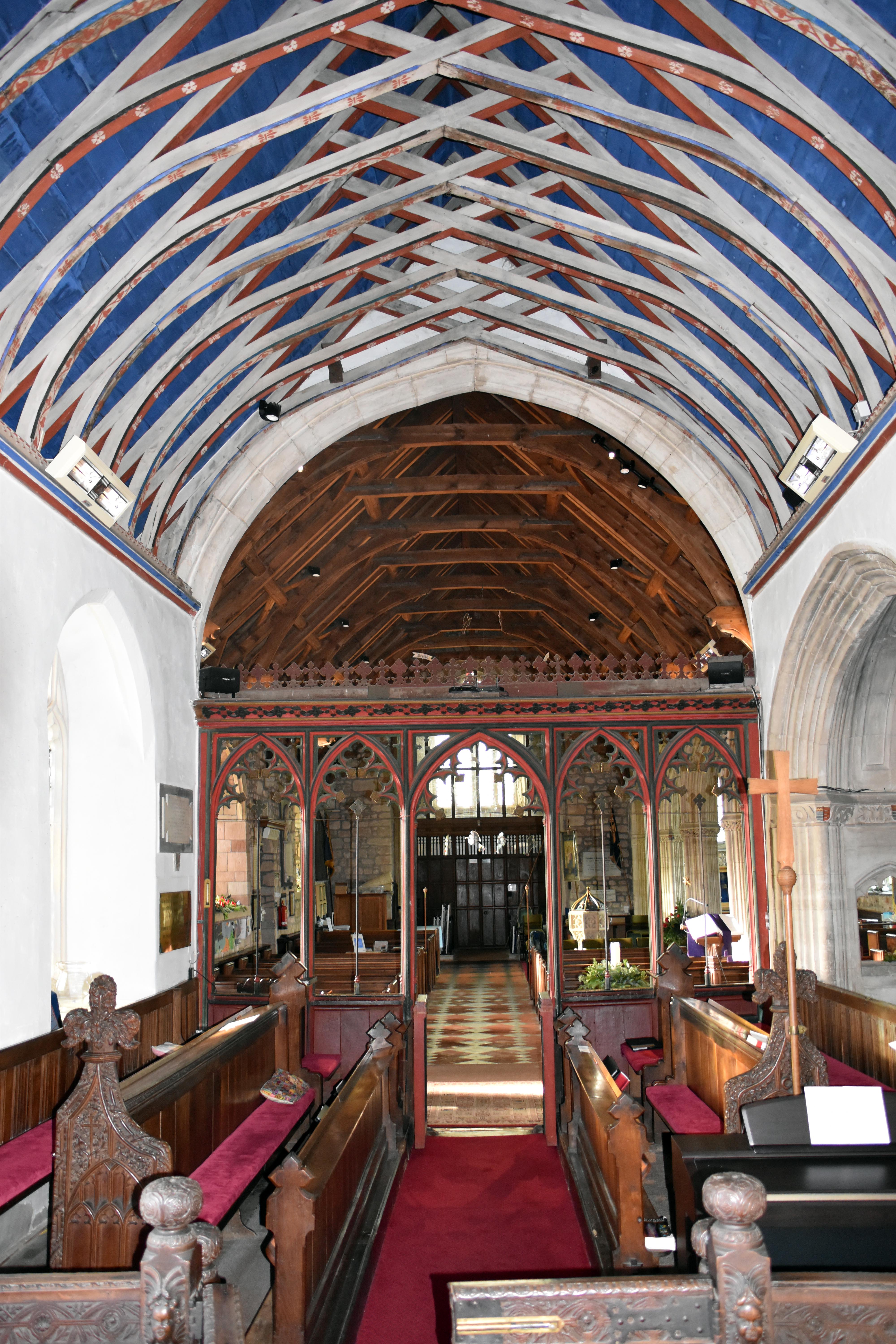
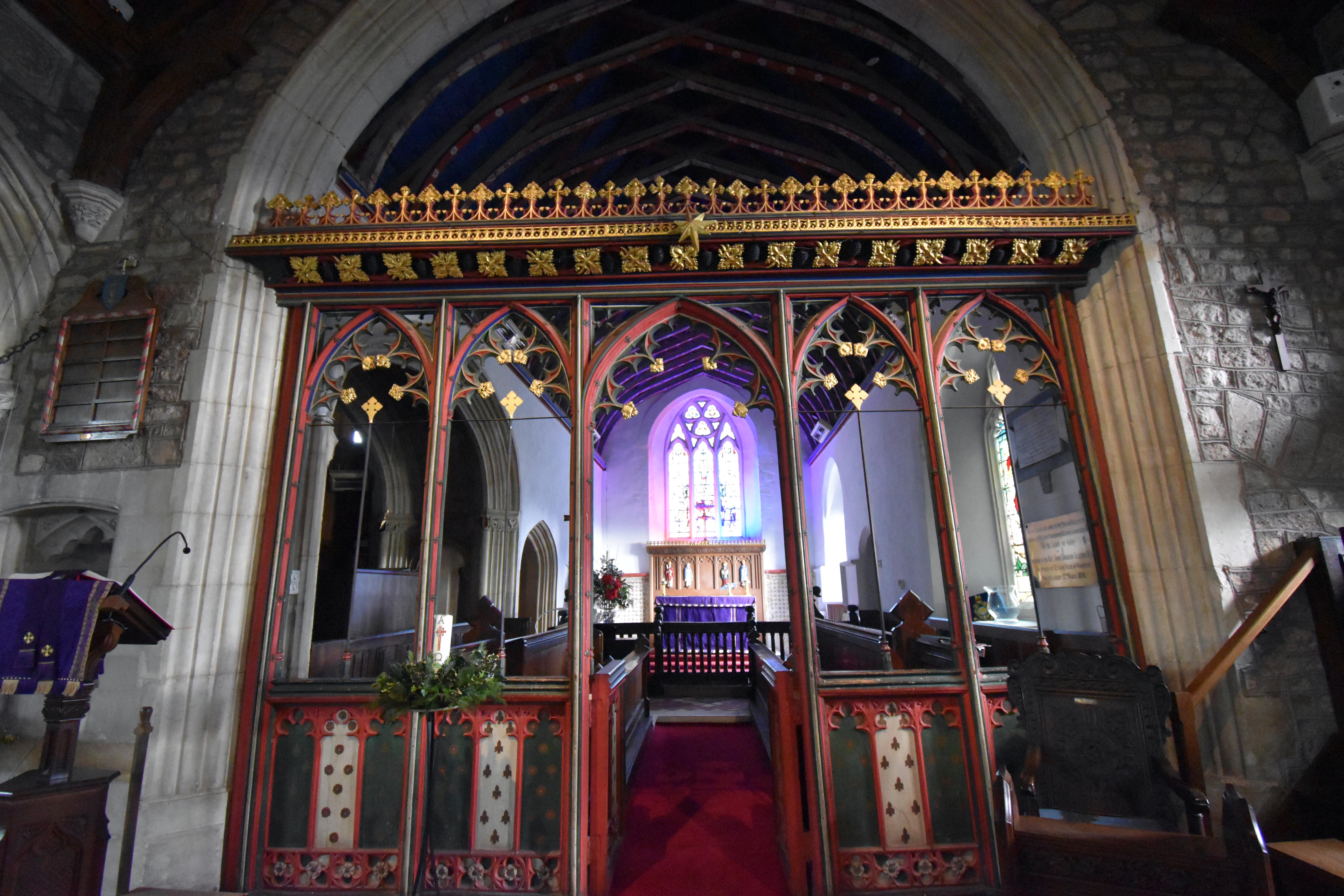
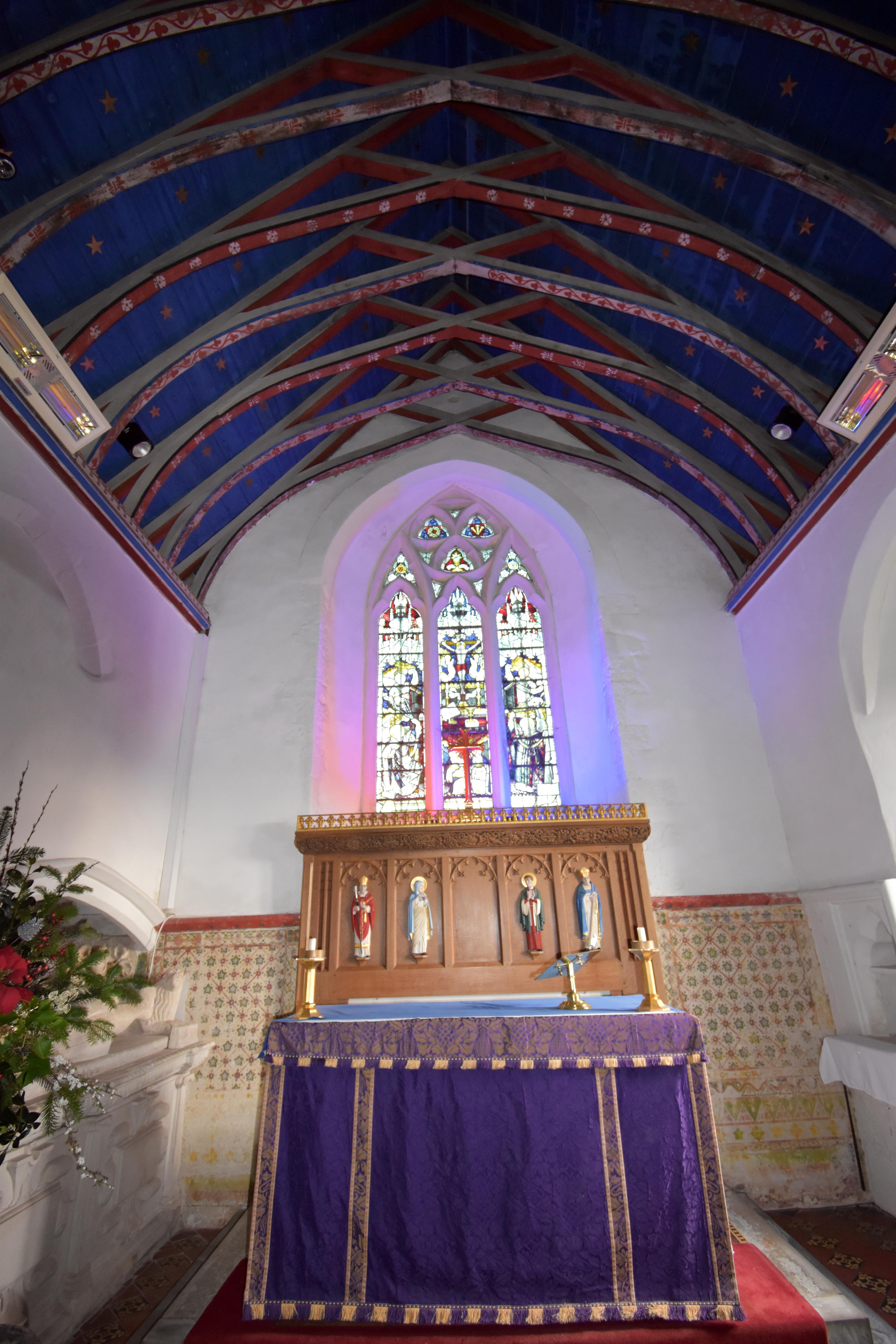
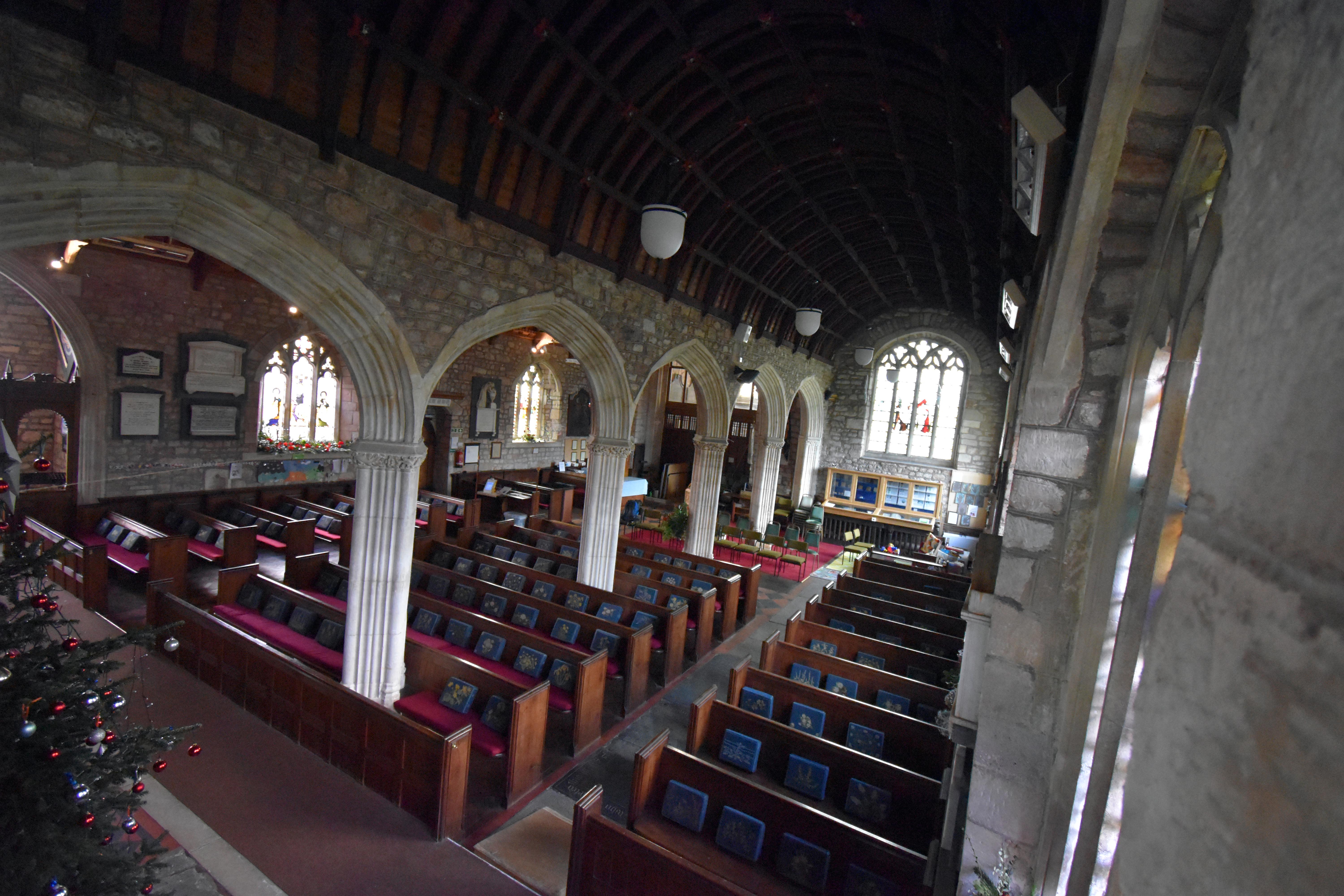
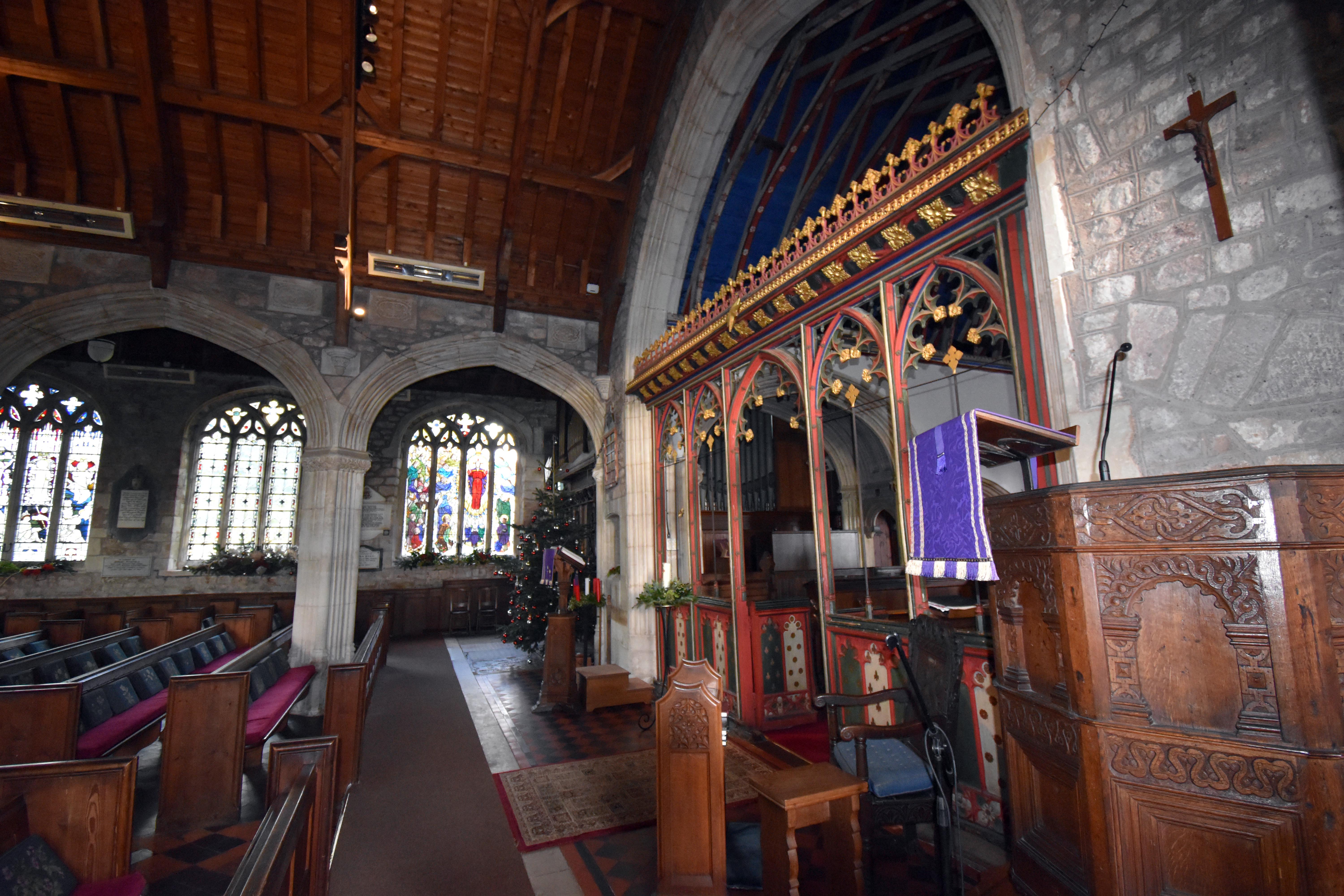
St Swithun’s is yet one more of Devon’s magnificent churches that seems to hold a plethora of history and fascinating ecclesiastical architecture and decorations. It also had its fair share of fascinating graves in the churchyard (and in the nearby overflow cemetery). The ceiling is painted beautifully and there is a hagioscope, also called a squint, which would allow people to view the chancel from a side chapel. In the medieval period these might be lepers but over time just gave a better view of the chancel from over crowded attendees - especially on special occasions. There is a rather beautiful Royal Coat of arms dedicated to King George III in 1799 which it says was presented by Thomas Huckell Lee the Captain of the Woodbury Volunteers – presumably raised with all the Revolutionary threat coming from France. Intriguingly we learn elsewhere in the church that his 17 year old son Thomas Huckell Lee died just the year before in 1798 near the Cape of Good Hope on his Third Voyage to the East Indies. What took such a young person to undertake such dangerous travel quite so frequently is not explained.
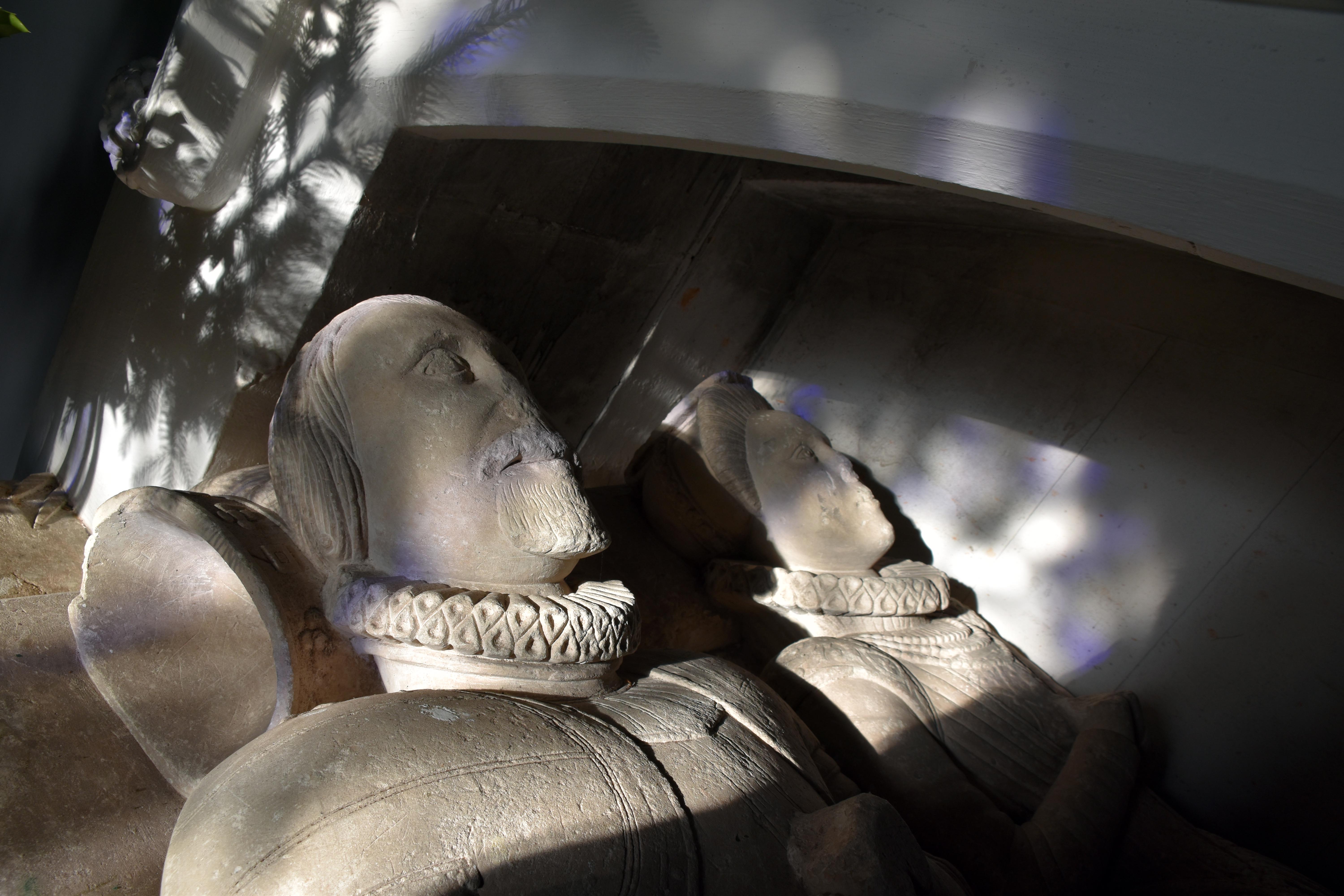
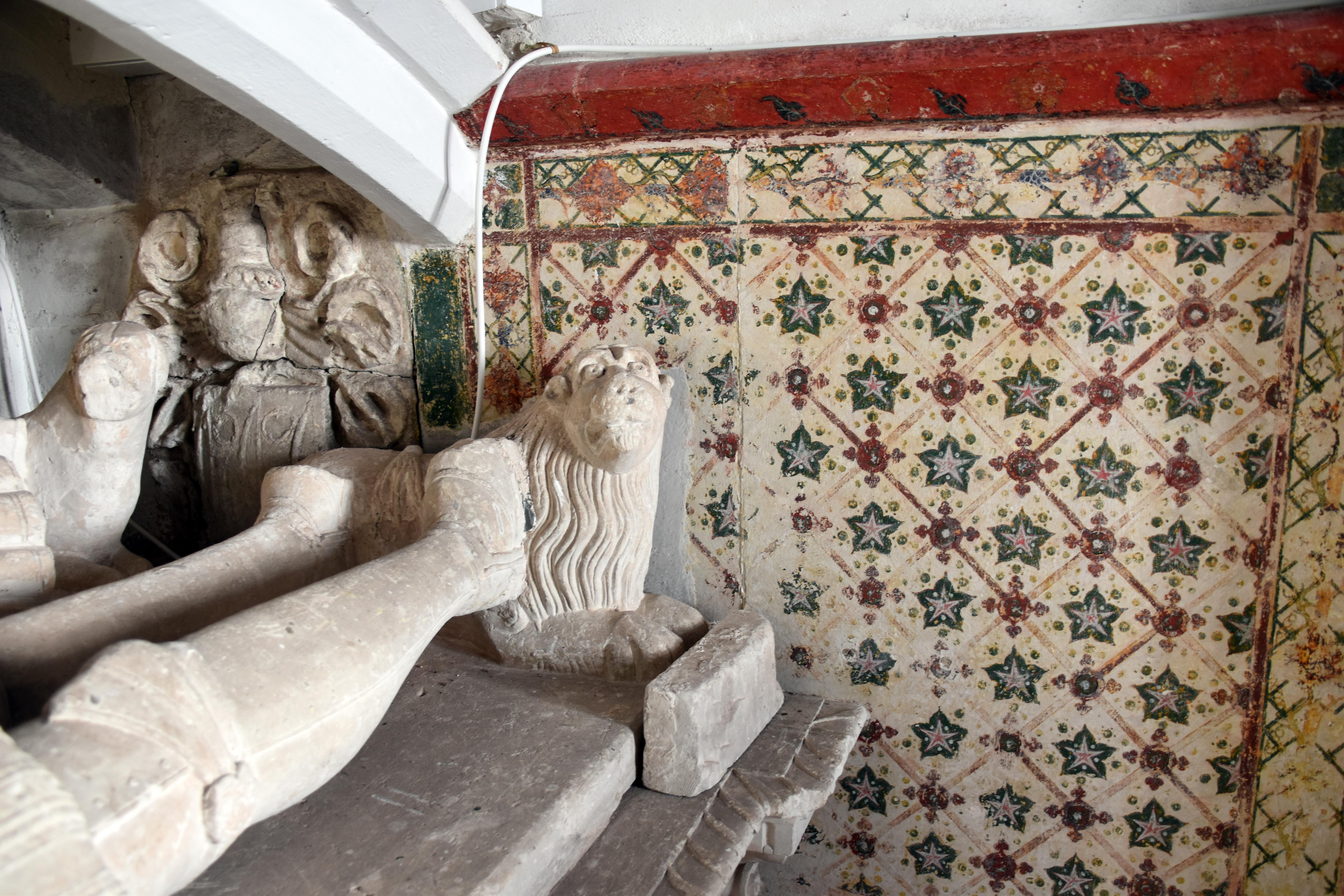
There is an impressive effigy to Sir Thomas Prideaux and his wife. Interestingly they became connected to Woodbury when they took over one of the Grey family estates that were seized following the execution of Lady Jane Grey and her unhappy 9 days on the throne in 1553 before Queen Mary took back the crown. Thomas was knighted on the accession of James I in 1603. At their feet lie a dog which doesn't necessary mean they wanted to remember a pet - it often symbolised loyalty. Interestingly next to the dog you can make out some of the old pre-white wash decorations that used to be common in churches up and down the land before the Reformation.
 |
|
|
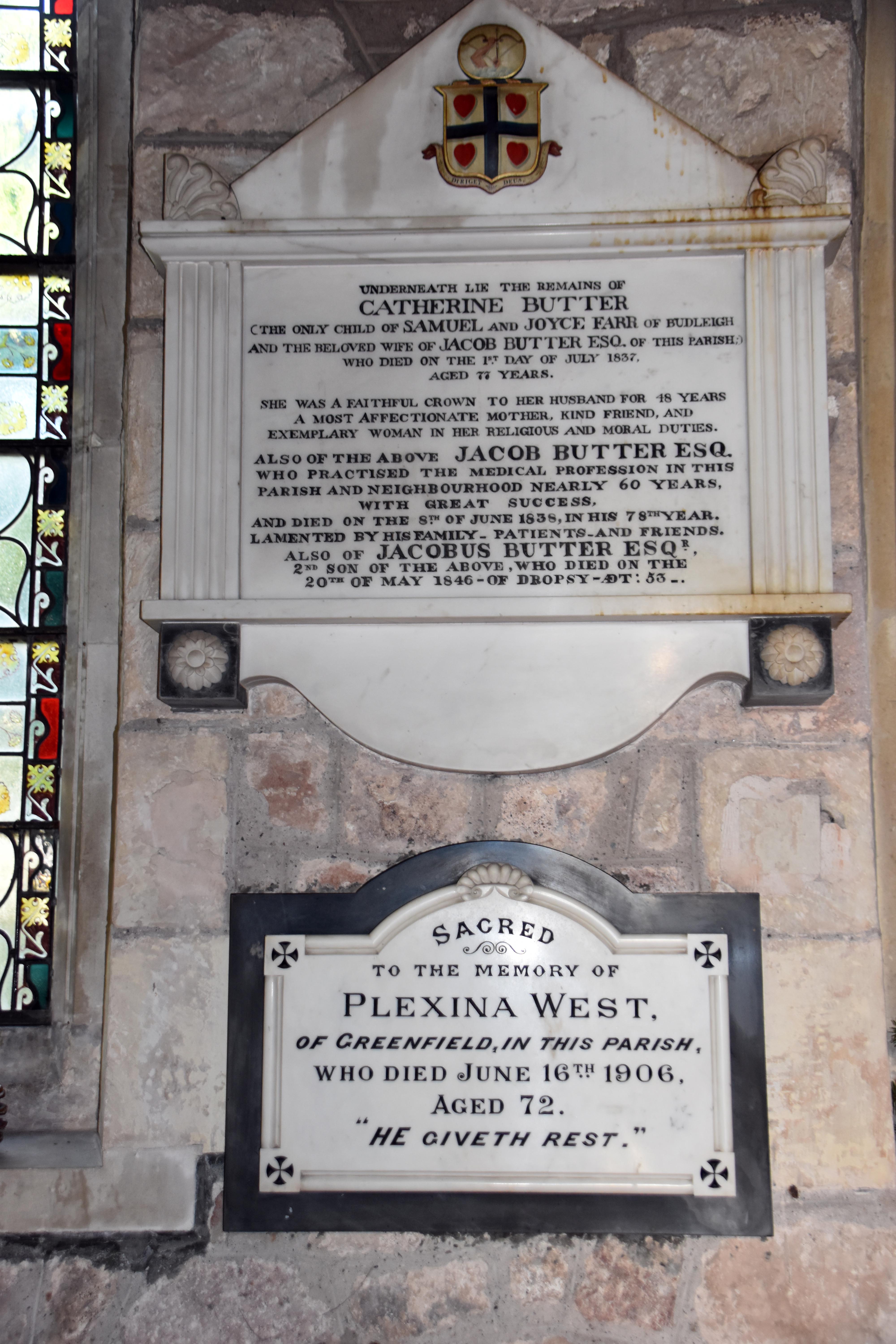
Inside the church there are no less intriguing memorials including one to Jacob Butter whose brother went out of his mind and spent many years in lunatic asylums. Jacob became a doctor but I was interested to note that his son John followed him into the medical profession and was the founder of the Eye Hospital in my home town of Plymouth. It started
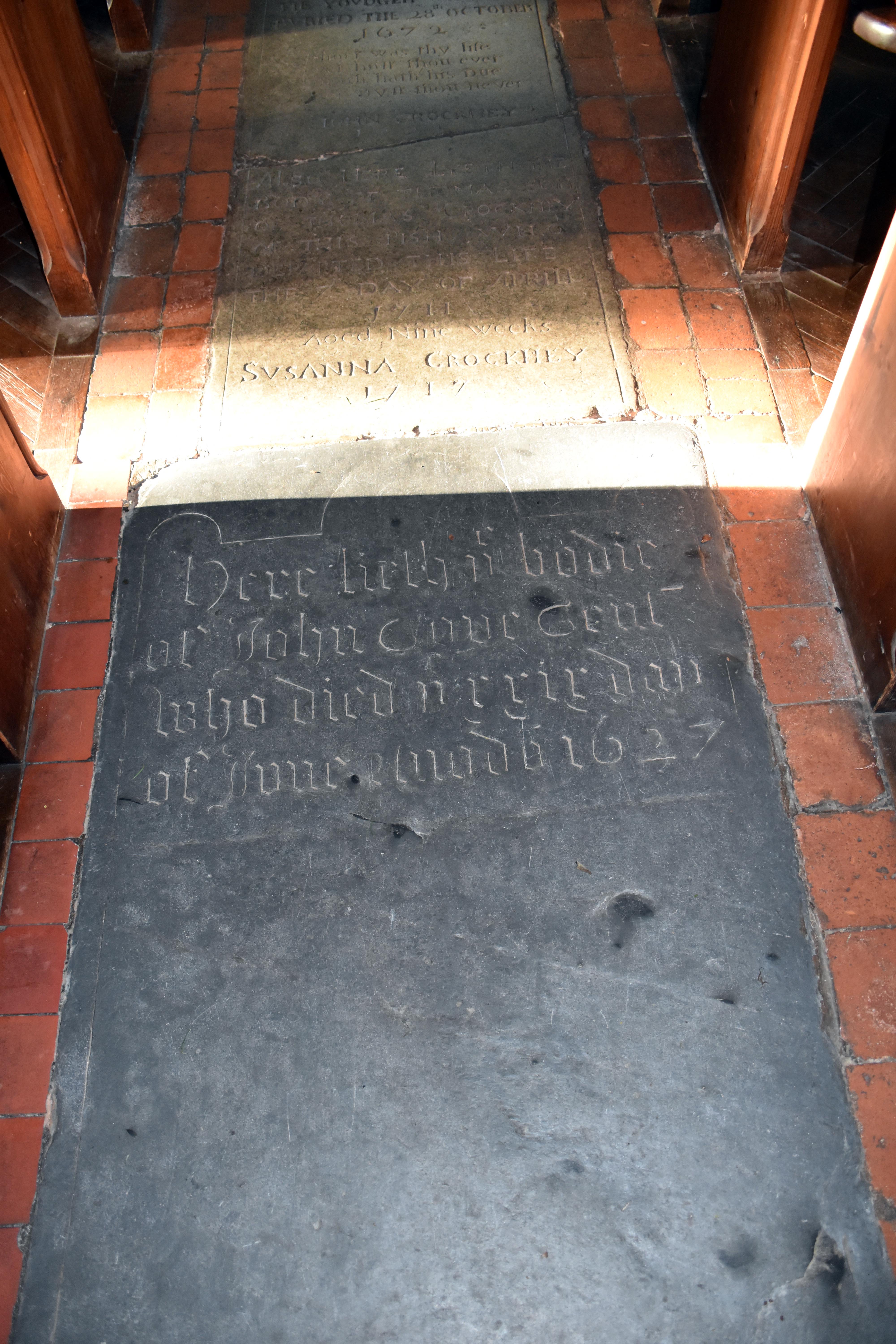
There is a William Whetcombe slab on the floor who epitomises just how international the reach could be from a Devon village. He was born in 1565 and married in 1589. We often assume that in the 16th and 17th centuries they would likely stay local but in this case one of his sons moved to Kinsale in Ireland where he ran a fishing fleet trading with the Newfoundland fisheries off Canada. Another son moved to Smyrna in Greece (modern day Izmir in Turkey) where he became a successful merchant. A third son settled in London and prospered there. One daughter did marry a local yeoman, but the family as a whole shows just how wide the world could become for those willing to seize its opportunities.
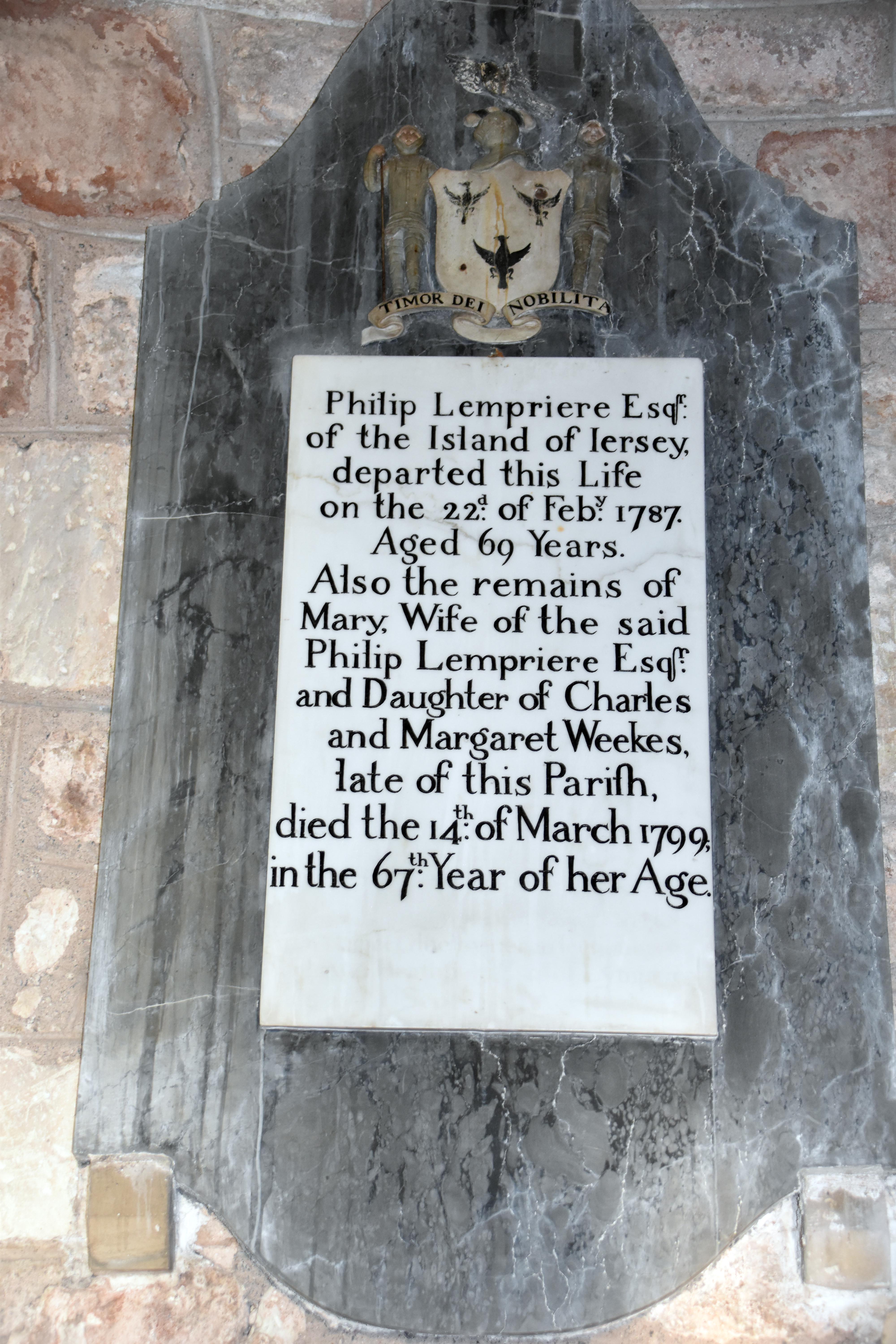
Not quite so far away but just as exotic in its own way is the memorial to Philip Lempriere 1717 – 1787. He had actually been born on the island of Jersey as the second son of the Siegneur of the Dielament – the leading family on the island. Indeed his own great grandfather had been Oliver Cromwell’s bailiff when they finally took it from Charles II as one of the last parts of the kingdom to fall to the Commonwealth. He actually ended up in Devon thanks to an uprising in Jersey against the Lempriere family. His brother was the Lieutenant Bailiff and Philip was given charge of collecting taxes and had been made Attorney General in 1758 but the entire family fled to England in 1770. Philip’s wife (Mary Weeks) had connections to Woodbury where her step father owned a farm. They themselves lived in Woodbury House which still stands today.
 |
|
|
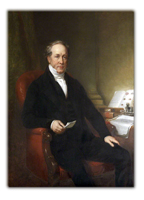
There is also a dedication to Sir Henry Pollexfen (whose family is connected to the Bastard family through marriage at Buckland-in-the-Moor but only in later generations). In many ways he was the most interesting of all characters commemorated in the church but sadly I couldn’t see his tomb as I believe it is underneath the carpet in the chantry! At least that is where it was marked to be on the map. He is interesting for a couple of reasons. One, he was involved in the famous trial of the Seven Bishops in 1688, defending the Protestant clergy against King James. The king had demanded they remove all legal restrictions on Catholics and non‑conformists – a deeply unpopular move that made Henry Pollexfen a household name. Indeed William of Orange after he landed in Devon (not that far away really in Brixham) consulted Henry personally on the legal situation in the aftermath of King James fleeing the kingdom. Henry Pollexfen offered an interesting legal fiction that appealed very much to King William of Orange and his Stuart wife Mary (who of course was the daughter of the King she would be replacing). Henry Pollexfen basically said that the throne was ‘vacant’ as James had fled. Indeed James ‘went away because the terror of his own conscience frighted him and he durst stay no longer'. Henry’s was one of the most influential voices in the debate and in December he was appointed by the Lords on how to legally convene a new parliament. Henry himself was returned as MP for Exeter in the specially created 1689 Convention Parliament. It was this Convention that finally provided the legal basis for King William of Orange and his wife Queen Mary Stuart to jointly become monarchs – for the first and only time in history. The reason for this was that if the throne were ‘vacant’ it should legally have passed to the next heir which was Mary alone. However she refused to take it alone and would only agree to doing so with her husband. This convention also made it illegal for a Roman Catholic to be heirs of the throne which conveniently disinherited what would become known as the Jacobite line. The convention was dissolved in 1689 and regular parliaments were held from 1690 formalising this arrangement which Henry had done so much to formulate. There is a real irony that such a persecutor of the 1685 rebels would become one of the most important Protestant rebels of all just three years later! Another interesting aspect of his life is that his family married in to the Drake family with his daughter marrying Sir Francis Drake the third baronet (and great nephew of the famous Sir Francis Drake). Their eldest son would become the 4th Baronet and carry on the Drake line.
I have to say that this church was far busier than most we’ve seen in terms of volunteers and visitors. There was a steady stream of people coming in and out of the church, and there was a buzz of activity in the churchyard and porch in the run‑up to Christmas. It is nice when you see churches being appreciated by locals and visitors alike.
 |
|
|
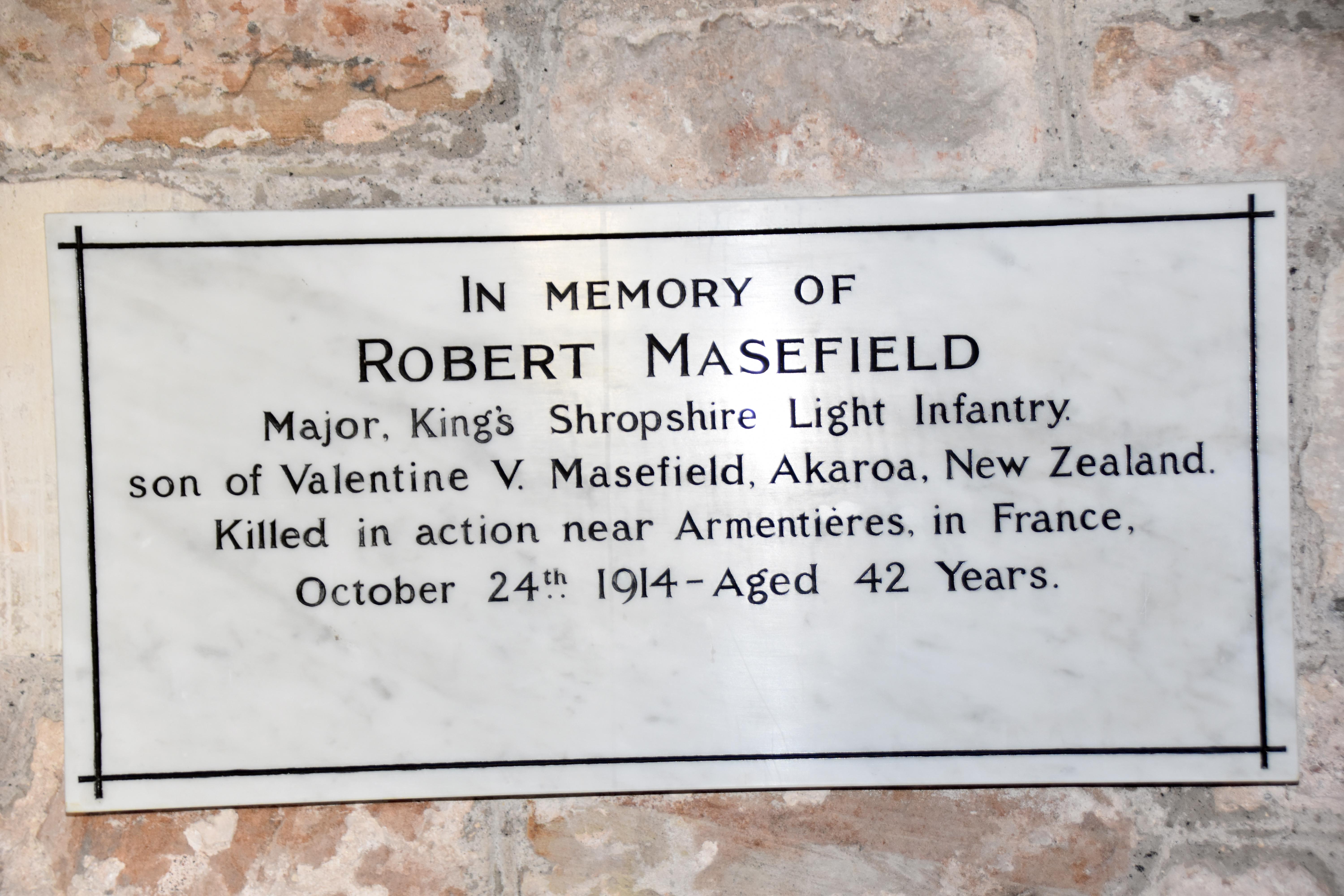
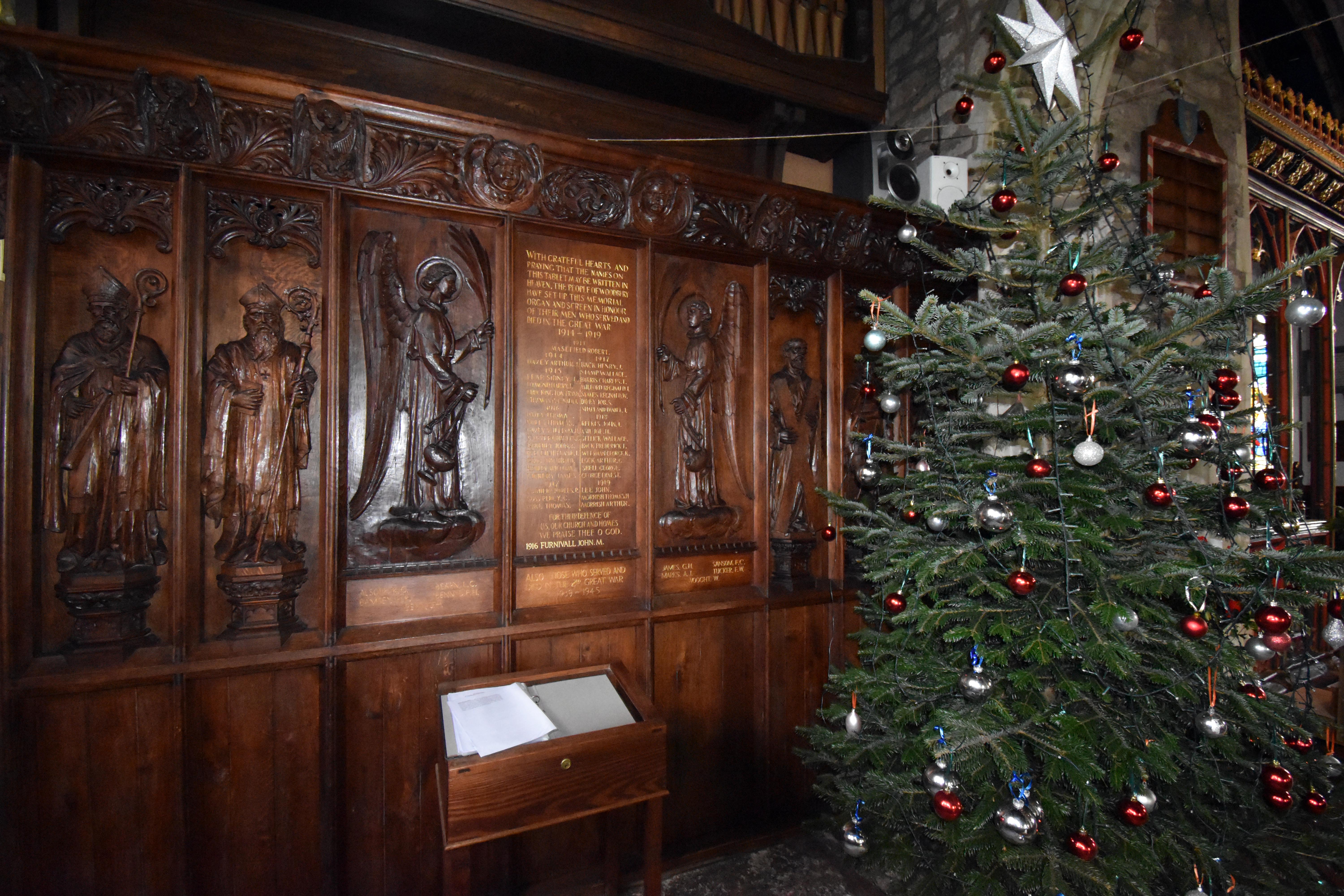
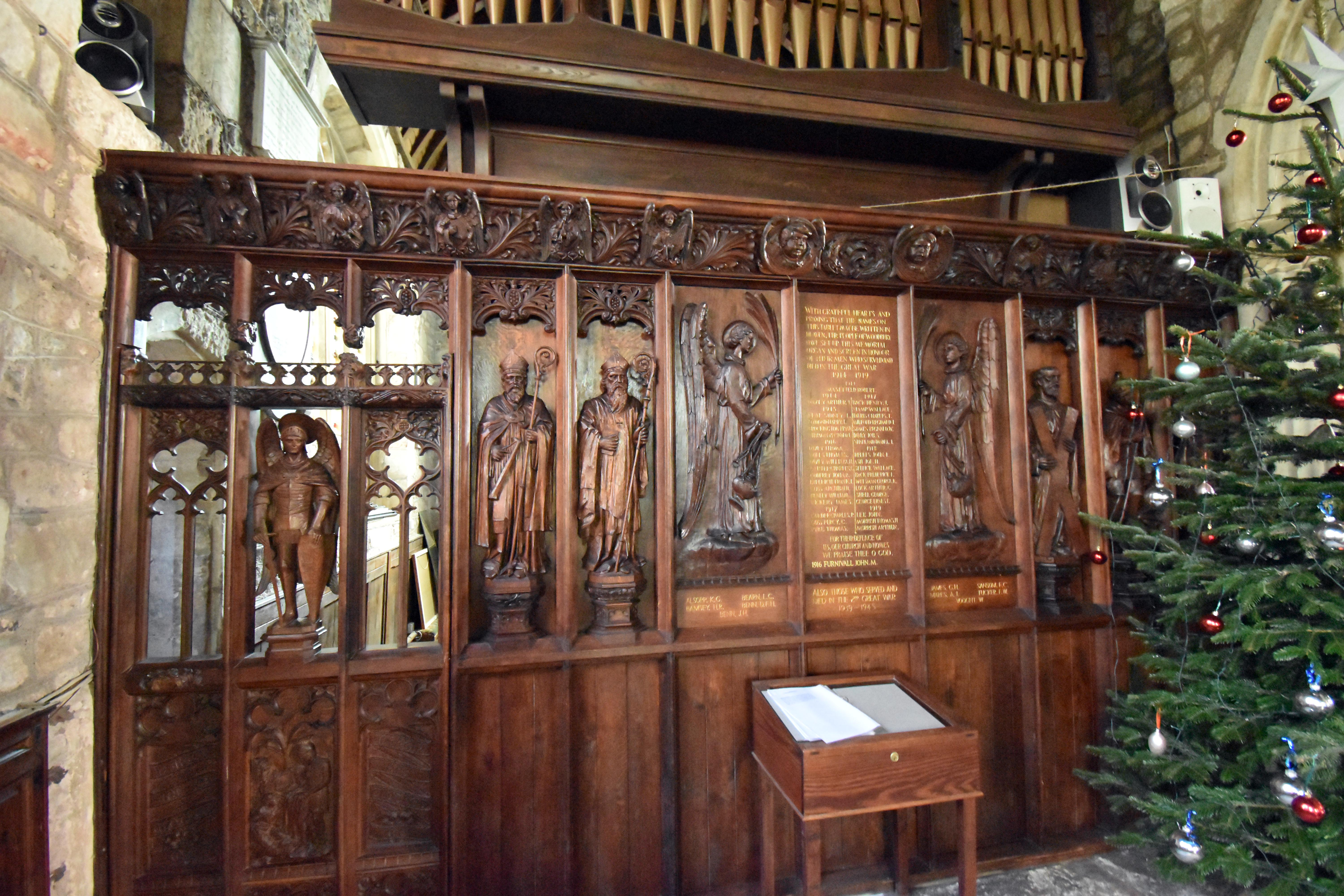
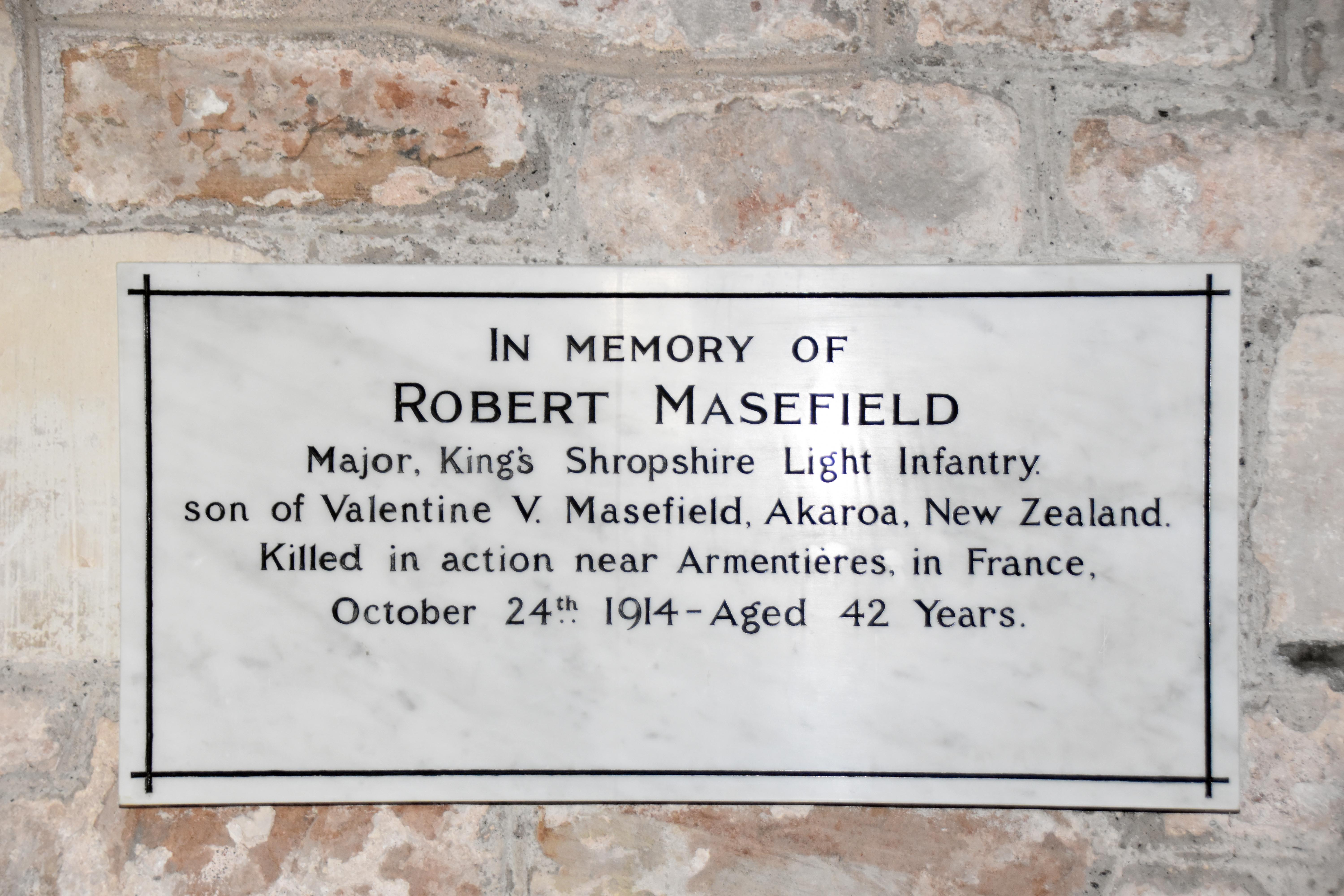
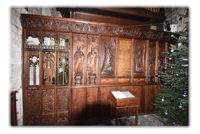
The church also has a truly beautiful wooden World War One memorial which was later adapted to include Second World War names too. The very first name, Robert Masefield, killed in 1914, also has his own plaque once again linking this Devon parish to the wider Empire. In this case it mentioned that this Major in the King’s Shropshire Light Infantry was the son of Valentine Masefield of Akaroa in New Zealand. Robert was himself born in Akaroa but appeared to have been raised largely by his uncle in Woodbury. He married Mary Wheatley who was from an Indian Army family (see below) in 1908. Robert was a surprisingly old 42 when he died in Armentieres in October. He himself had had quite the imperial track record, having been posted to Ireland, Hong Kong, India and had served in South Africa as a Captain. He spent much of the intervening years in India with the 2nd Battalion but was home on leave when war broke out in August. He was ordered to join their 1st Battalion immediately. He was killed trying to stop the Germans from reaching Calais by a shrapnel wound in the back.
 |
|
|
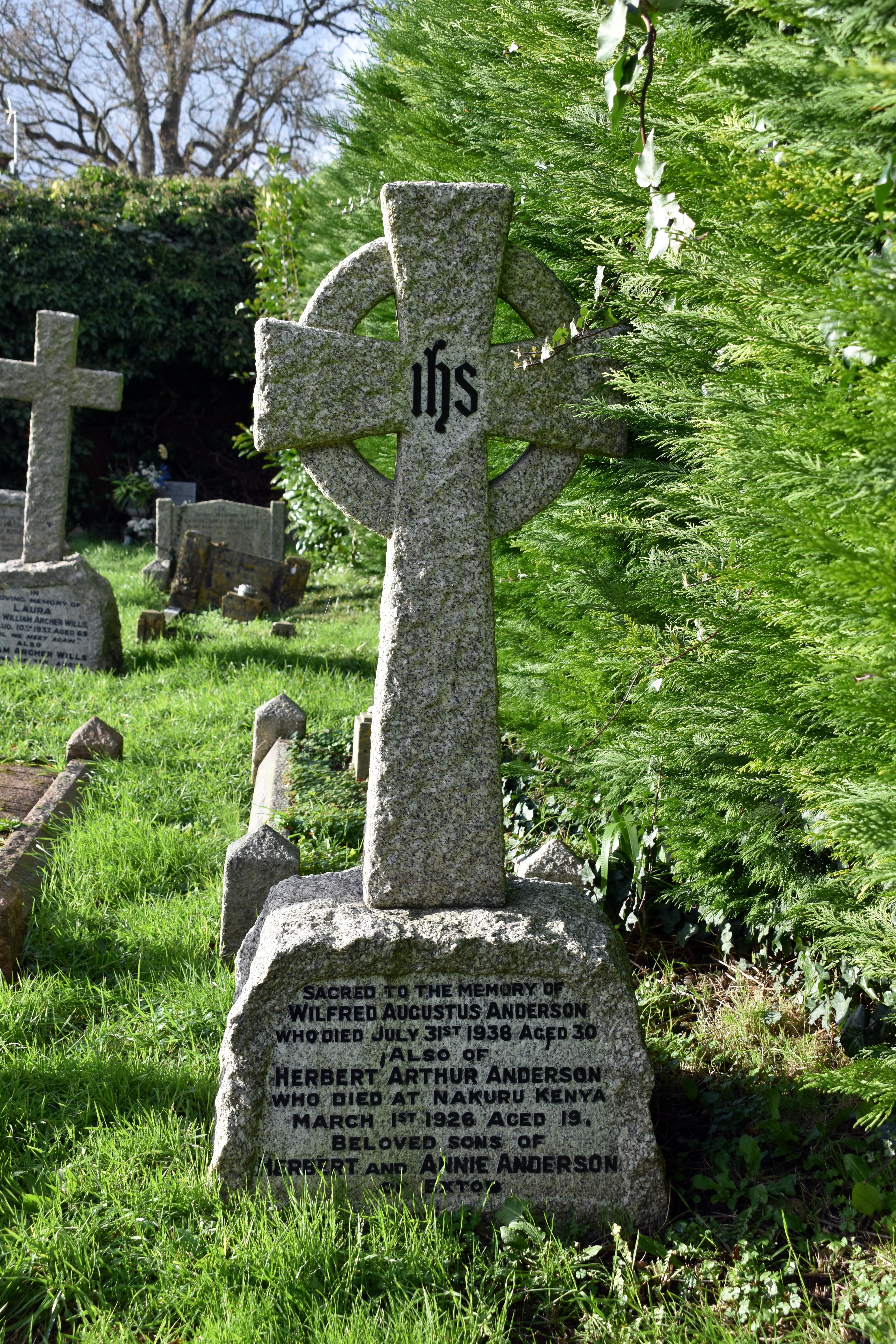
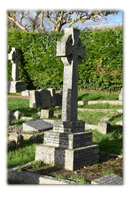
In the graveyard are some fascinating graves, many of them revealing imperial connections – from families who lost sons in Kenya to a remarkable three‑generation Bengal Cavalry dynasty, and even an ecclesiastical architect whose career spanned Australia and the Caribbean. Within the Wheatley family grave there is also interred Arthur’s brother Colonel Edward Eric Spencer Wheatley who served in the first world war as an artillery officer who was attached to the Royal Flaying Corps. He was injured in Salonica and won a DFC for his service in North Russia. During the wars he served with the RAF, the Indian Mountain Artillery, the Royal Army Pay Corps before finally joining the Royal Army Medical Corps in 1938. He served with distinction in North Africa in WW2 where he was awarded a CBE. He also lost a leg there and spent the rest of his life working to with amputees. It is remarkable how much history lies beneath a single family grave in this quiet Devon village.
It should be said that many old India hands when they retired from service would find Devon to be a destination in which to play out their senior years. Even anecdotal evidence from our many visits to Devon churchyards confirms this. I would have missed another Indian connection on a very weathered grave if I weren’t eating my lunch on a bench next to it – a grave to Thomas Suxpitch Brother of the late Captain Suxpitch (good local name) of Bombay who died on his passage home in 1822 aged 44. He was apparently the captain of the Sullimany for a Parsi owner and had been since 1811. He had at least once been stopped by the Royal Navy whilst trading tea with China He took ill on board a voyage home in 1822 and died en route with his nephew Robert Suxpitch Carter taking over command of the ship.
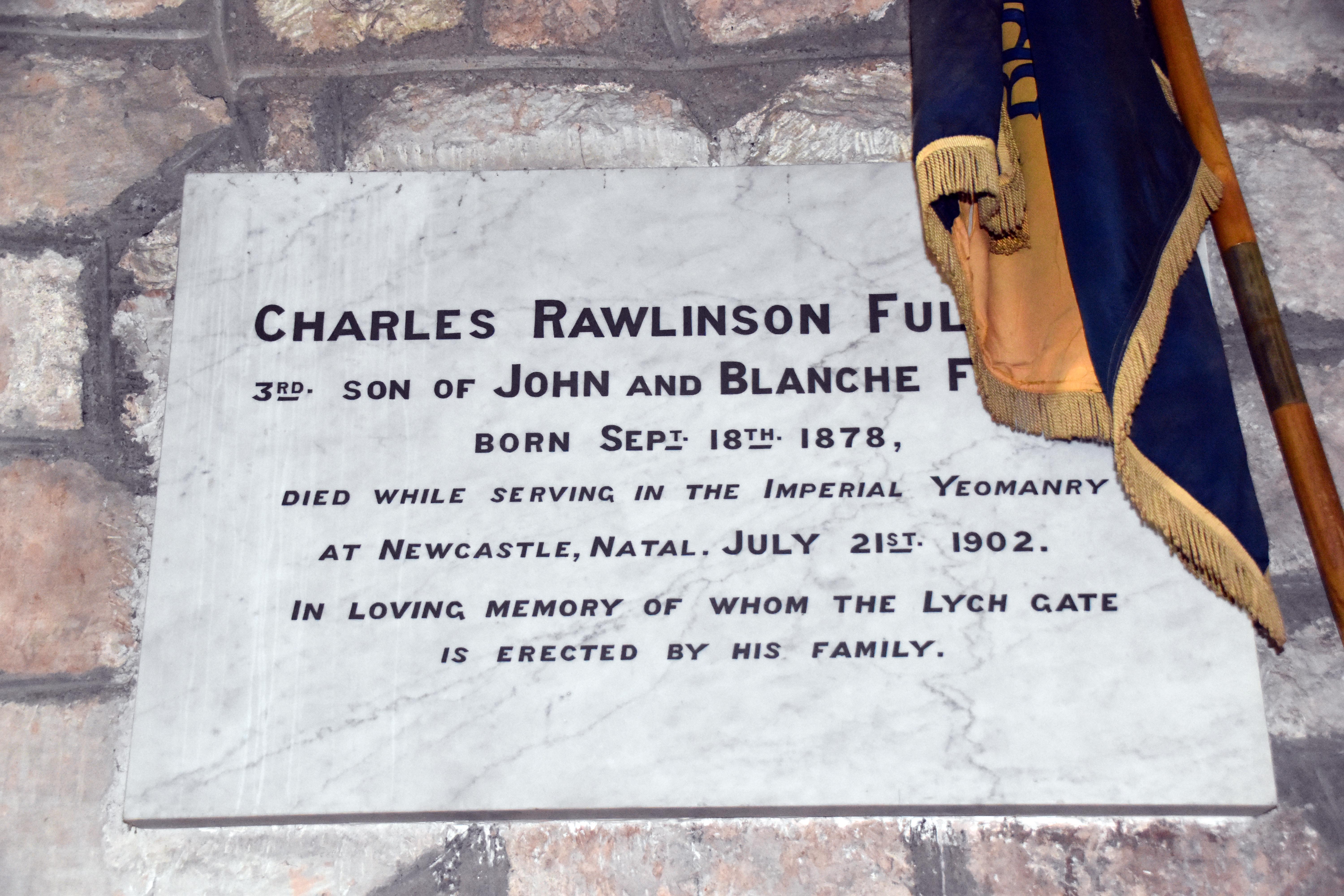
Another Imperial person buried in the church yard is Robert Medley Fulford who was named after Bishop Medley of Canada as his father had worked for him whilst rector of St. David’s church in Exeter. Robert went on to become an ecclesiastical architect and worked on many churches in Devon including St. Swithuns. However he was very much a child of Empire and spent four years as curate of the Cathedral of Christ Church in Australia and another two years as curate at St. Andrews church on the island of Grenada in the Caribbean. Another Fulford, in this case for Sergeant Charles Rawlisnon Fulford is also commemorated inside the church having been killed at Newcastle in Natal whilst serving with the Imperial Yeomanry in 1902. He was just 23 years old. His parents grief led them to dedicate the brand new Lych gate at the entrance of the church which still stands in his honour.
 |
|
|
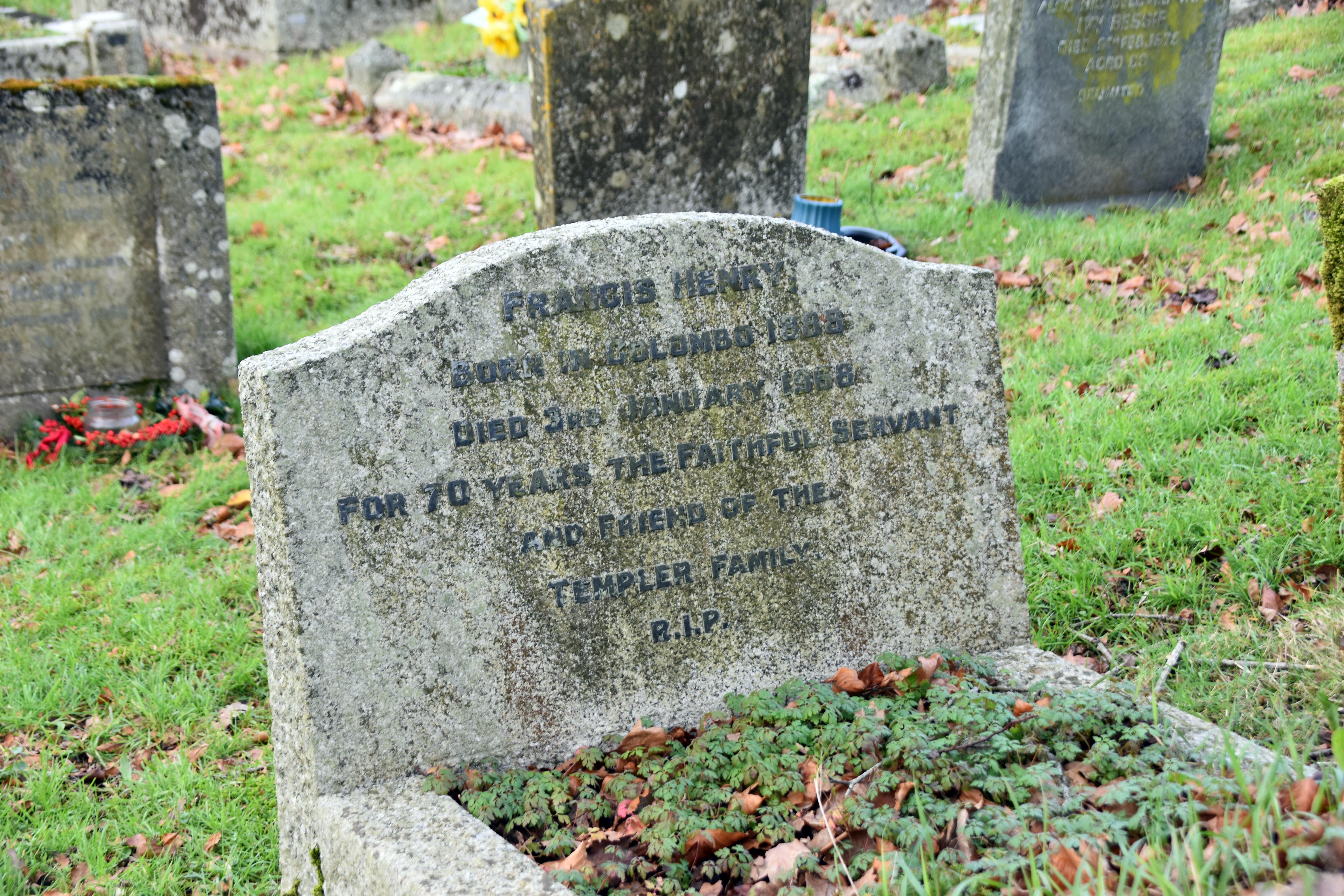
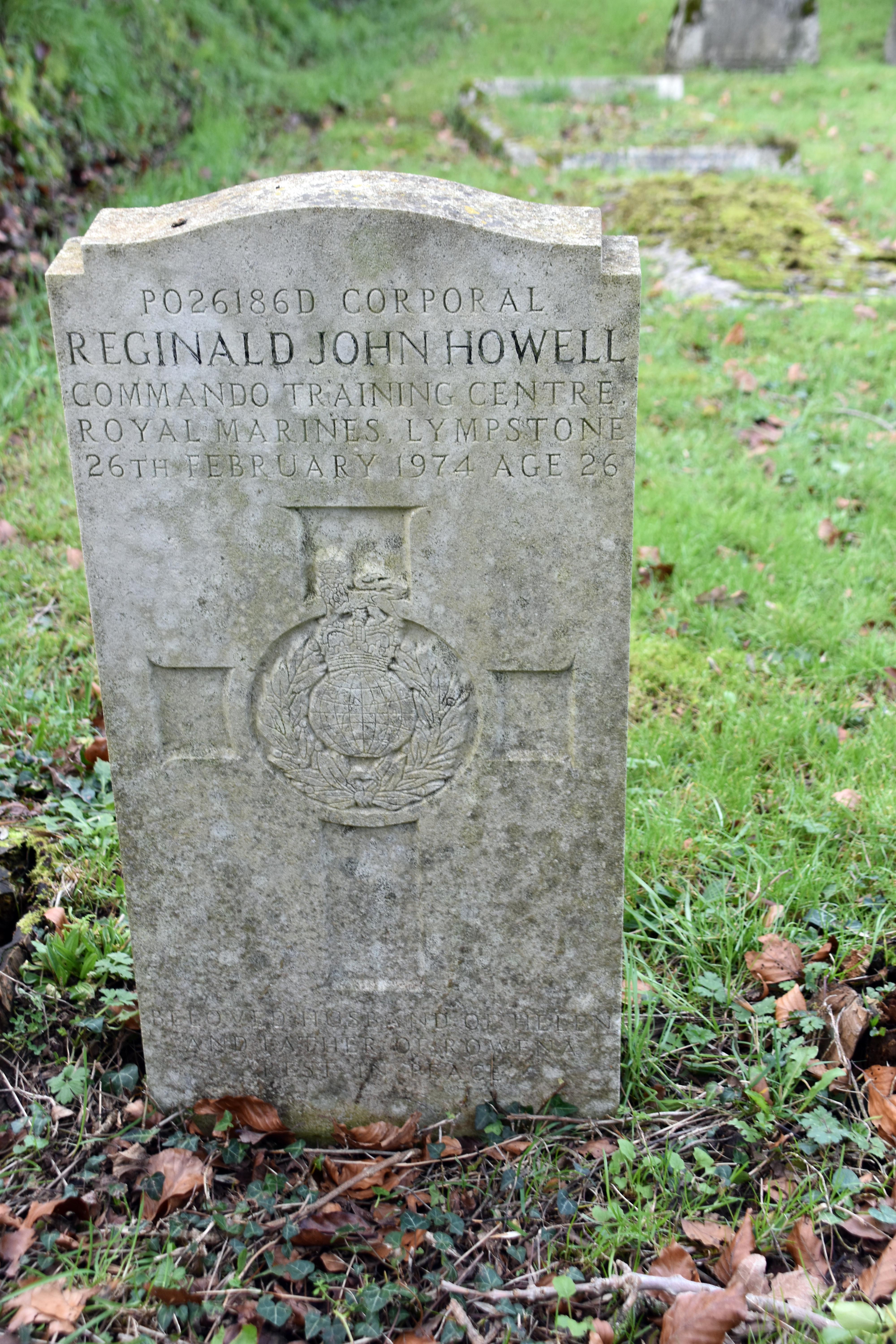
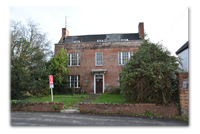
There was so much to see in this graveyard but we noticed that there was an overflow cemetery which we took a meandering route to discover. We walked past Woodbury House the home of Lempriere exiles. We saw examples of the heath pebble walls, lots of thatched houses before getting to the cemetery on the outskirts of town. Now being near to Lympstone there were a surprising number of Royal Marines buried within – and with MOD headstones indicating that they had died whilst still serving – presumably in accidents or possibly to medical issues. But there was an intriguing pair of graves that caught our attention. As you enter you see a fairly new gravestone to Brigadier Cecil Robert Templer Brigadier in the Royal Artillery who died in 1986. I first thought that maybe he is related to the Templers of Stover somehow. But soon I found an even more intriguing headstone to Francis Henry born in Colombo 1888 and died in 1968: “For 70 Years the Faithful Servant and Friend of the Templer Family”. So he started service as a 10 year old presumably in Sir Lanka and somehow followed the Templer family all the way back to Woodbury where he lies buried not far from his former employers. A fascinating insight into a vanished world of servants and imperial services.
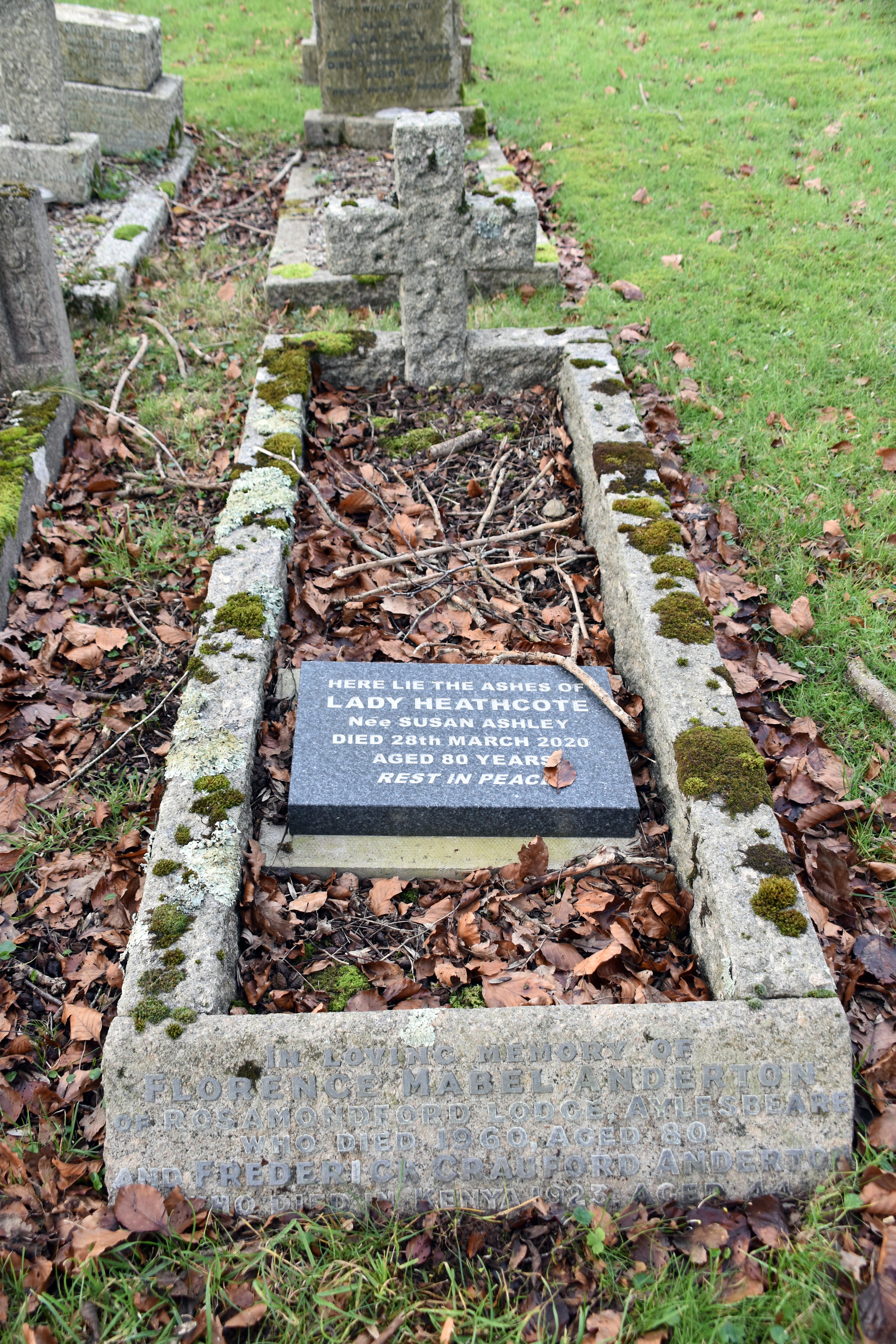
And just as I was leaving spotted another Imperial connection with Frederick Crauford Anderton who is remembered dying in Kenya 1923 at the age of 44 presumably with his wife Florence Mabel Anderton who died in 1960 at the age of 80. I don’t know entirely why but in the same grave space is a plaque to Lady Heathcote nee Susan Ashley who died in 2020. But back to Frederick I believe he was part of Anderton brothers of Nakuru who set up a firm in Nakuru in the early days of the Kenya colony. They would provide goods to farmers but would also supply and even lead safaris. They would meet their guests at Mombasa, bring them to Nakuru and embark on big game hunting. It would appear that poor Frederic died of acute spreading peripheral neuritis. They had two daughters but neither of them named Susan! So why is Lady Heathcote buried with them? I love these mysteries and trying to discover the past as we find it in the present.
All in all Woodbury Common, the Pebble Heath, the Iron Age hill fort, the fascinating St. Swithun’s church packed full of history with its not one but two graveyards provided a dream day out for this historian and his dog Rupert. It never ceases to amaze me just how many small villages and communities there are in the Westcountry just brimming with fascinating history.
|